Modern Home Designs
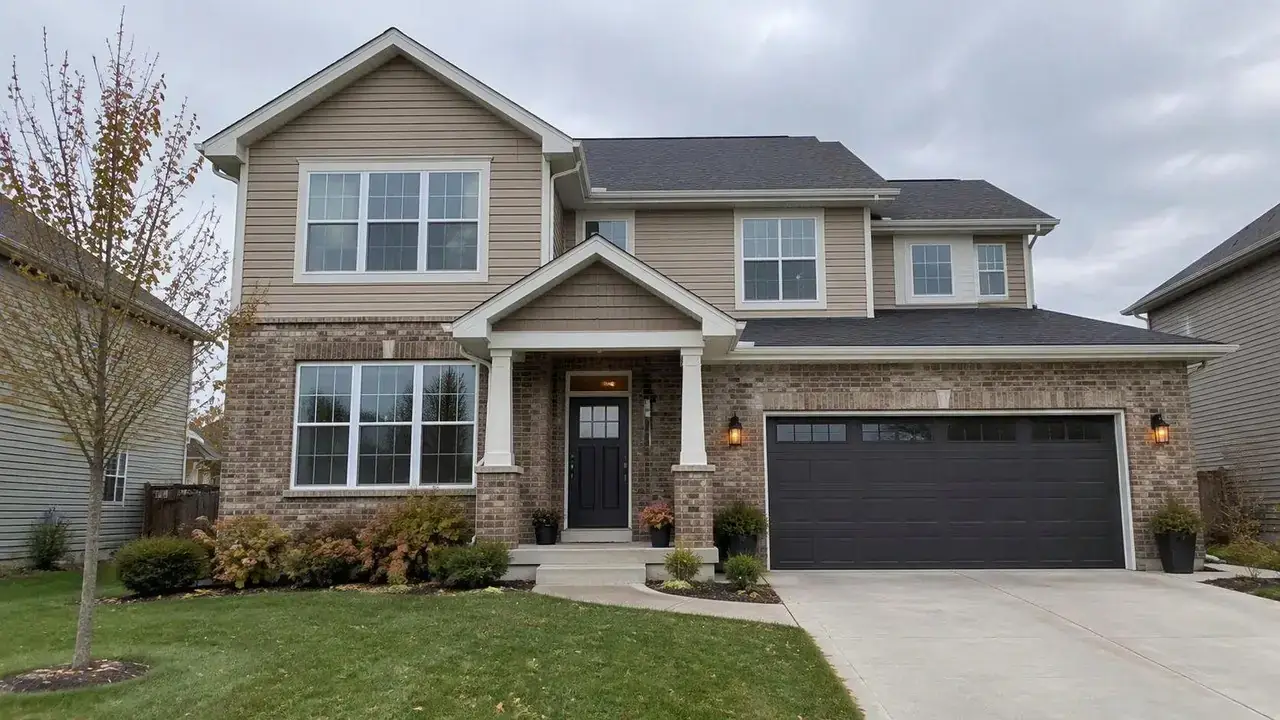
Crisp, thin frame lines suit contemporary custom homes and additions, especially with black or charcoal window packages. Aluminum holds a sharp edge and a consistent colour that vinyl struggles to match.
Get your written quote
Thermally broken frames for modern homes and businesses
GTS Windows & Doors supplies and installs aluminum windows for modern homes, offices, retail units and low-rise commercial buildings across Kitchener-Waterloo, Cambridge and Guelph. Our Kitchener-based installers have worked on residential and commercial openings since 1986, and we are licensed, insured, WSIB covered and a member of SAWDAC. Property managers, general contractors and homeowners use us for everything from a single storefront window to a full set of new frames on a custom home.
Aluminum has a mixed reputation in Ontario because many people remember the cold, frosty aluminum sliders fitted to houses and apartments decades ago, with ice on the frames every January. Modern residential and commercial aluminum is a different product. A thermal break made of low-conductivity material separates the inside of the frame from the outside, so winter cold is no longer carried straight through the metal and into your room.
We install thermally broken aluminum where its strength and narrow profiles are worth paying for, replace old non-broken sliders with better-performing windows, and fit aluminum-clad wood for homeowners who want timber inside. This page explains how each option performs through a Waterloo Region winter, which finishes hold up best against sun and road salt, and what each typically costs installed in 2026.
Aluminum is one of four frame materials in our window lineup, and it is the specialist choice rather than the default. It earns its place in four situations.
For a standard residential replacement where budget and insulation value matter most, vinyl or fibreglass usually delivers more comfort per dollar. We will tell you when aluminum is the wrong fit for a project.
Crisp, thin frame lines suit contemporary custom homes and additions, especially with black or charcoal window packages. Aluminum holds a sharp edge and a consistent colour that vinyl struggles to match.
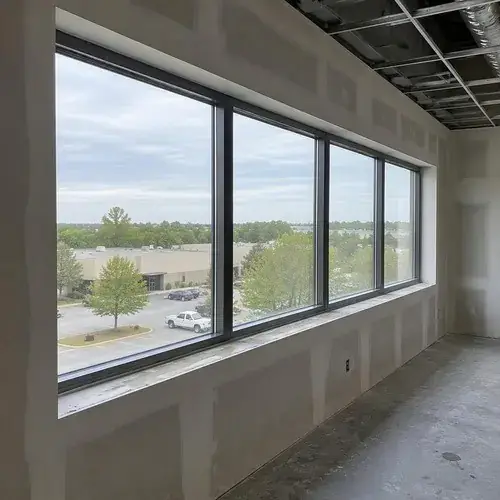
Aluminum is strong enough to hold large glass in very slim frames. More of the wall becomes view and daylight rather than frame.
Floor-to-ceiling units, corner glazing and tall fixed panels are where aluminum's stiffness pays off. These heavy lites would need bulky reinforcement in other materials.
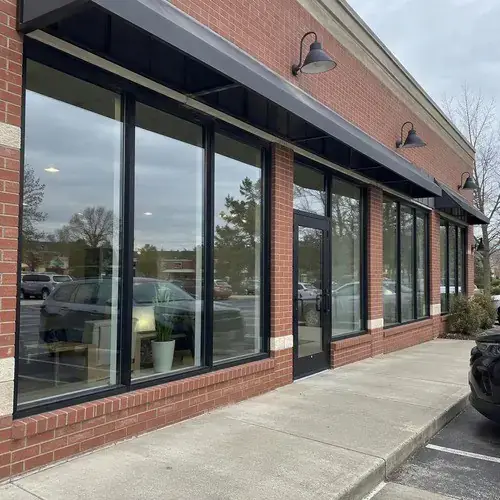
Offices, plazas, retail units and apartment buildings use aluminum windows and storefront framing for durability and high-performance finishes. Commercial systems are also designed to meet the structural loads of larger buildings.
Aluminum conducts heat roughly a thousand times faster than vinyl. In a frame with no thermal break, the inside face of the metal sits close to outdoor temperature on a cold night, drops below the room's dew point, and collects condensation or frost.
A thermal break interrupts that path with low-conductivity material, usually polyamide strips or a poured polyurethane core, locked between the interior and exterior aluminum. The room-side frame stays much warmer, which cuts both condensation and heat loss.
For homes in Waterloo Region, we only recommend thermally broken aluminum paired with Low-E insulated glass and warm-edge spacers. Ask for the whole window's tested U-factor or its ENERGY STAR listing, not just the glass rating, because the frame can change the result significantly.
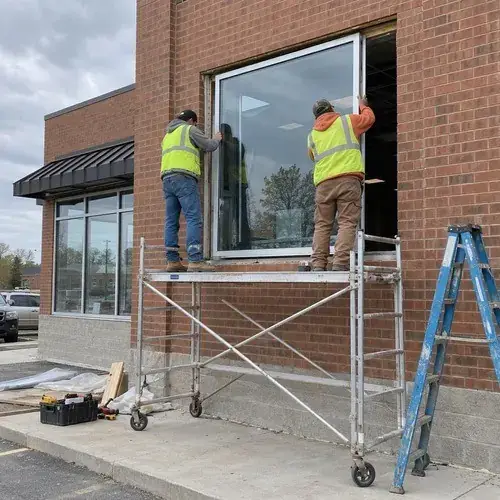
Installation details matter more with metal frames. We keep aluminum away from direct contact with pressure-treated lumber and dissimilar metals that can cause corrosion, and we set the frame on a sloped sill pan with end dams so water drains outward.
On the room side, the gap is filled with low-expansion foam and sealed to the air barrier, so warm indoor air cannot reach the colder outer edge of the frame. Skipping that air seal is a common reason even thermally broken windows show condensation at the perimeter.
Many Ontario houses and low-rise apartment buildings from the 1960s and 1970s were built with single-glazed or early double-glazed aluminum sliding windows, and some are still in service around Kitchener, Waterloo and Cambridge. Common complaints are frost on the frames, rattling sashes, worn rollers and drafts at the meeting rail.
Replacing them is usually straightforward because the openings are rectangular and fairly standard in size. Most homeowners switch to vinyl or fibreglass sliders or casements, while buildings that want to keep a slim metal look move to thermally broken aluminum.
Not sure yours are due? Our guide on when to replace windows covers the signs that point to replacement rather than repair.
Aluminum-clad wood windows put a thin extruded or roll-formed aluminum skin over the exterior of a wood frame. You get a factory-finished metal exterior that sheds weather and never needs painting, with warm, stainable wood on the room side.
Hybrid designs pair an aluminum exterior with fibreglass or composite frames behind it. They cost more than single-material windows but suit homeowners who want a metal look outside without the cold interior surface of an all-aluminum frame.
Clad wood is common on higher-end custom builds and heritage-sensitive renovations, and we cover it in more depth on our wood windows page.
The finish decides how an aluminum window looks after 20 years of sun, road salt and cleaning. Commercial specifications often call for AAMA 2605 high-performance paint or AAMA 611 Class I architectural anodizing.
| Finish | How it works | Best for |
|---|---|---|
| Anodized | An electrochemical process thickens the aluminum's own oxide layer, so the finish is part of the metal | Clear and bronze tones, high-traffic commercial frames, scratch resistance |
| Painted (PVDF) | A factory fluoropolymer coating, typically 70 percent PVDF resin, baked onto the metal | Wide colour range with excellent fade and chalk resistance |
| Powder coat | Dry powder applied electrostatically and oven cured | Good colour choice at a lower cost, common on residential lines |
Typical 2026 installed prices in Waterloo Region are below. Aluminum usually costs more than vinyl or fibreglass for the same opening, and commercial systems are priced per project.
For residential pricing across every frame material, including whole-house budgets, see our 2026 window and door cost guide.
| Aluminum window type | Typical installed price (2026) |
|---|---|
| Thermally broken casement or awning, medium | $1,400 to $2,800 |
| Thermally broken slider, medium | $1,200 to $2,400 |
| Thermally broken fixed picture window, large | $1,800 to $3,800 |
| Floor-to-ceiling fixed glazing or window wall | $90 to $200 per sq ft |
| Aluminum-clad wood casement, medium | $1,500 to $3,000 |
| Old aluminum slider replaced with vinyl, for comparison | $750 to $1,300 |
Only if they are thermally broken and fitted with insulated Low-E glass. A non-broken aluminum frame conducts cold straight to the interior and will frost up in a Waterloo Region winter. Modern thermally broken systems are used successfully in homes and commercial buildings across Canada.
The metal frame carries heat outdoors so efficiently that its interior surface falls below the dew point of your indoor air. Moisture condenses on it and freezes when it is well below zero outside. Lowering indoor humidity helps a little, but the lasting fix is replacing the frames with thermally broken aluminum, vinyl or fibreglass.
Aluminum frames are extremely durable and do not warp, so a quality thermally broken aluminum window can outlast vinyl, often reaching 30 years or more. Vinyl typically lasts 20 to 30 years or more and insulates better per dollar. With either, the sealed glass units and hardware usually need attention before the frame.
Yes. We install aluminum windows and storefront framing for offices, retail units, plazas and multi-residential buildings across Waterloo Region. Our commercial window installation page explains how we plan and schedule work in occupied buildings.
Send us your drawings or book a site visit and we will quote thermally broken aluminum, clad wood or a vinyl alternative for the same openings. Commercial and residential projects are both welcome.
Call or text226-806-0597