Security
A steel skin bonded to a rigid foam core resists kicking and prying far better than an older panelled wood door. Paired with a reinforced frame and a solid deadbolt, it is a very hard door to force.
Get your written quote
Insulated steel doors, fitted tight and square
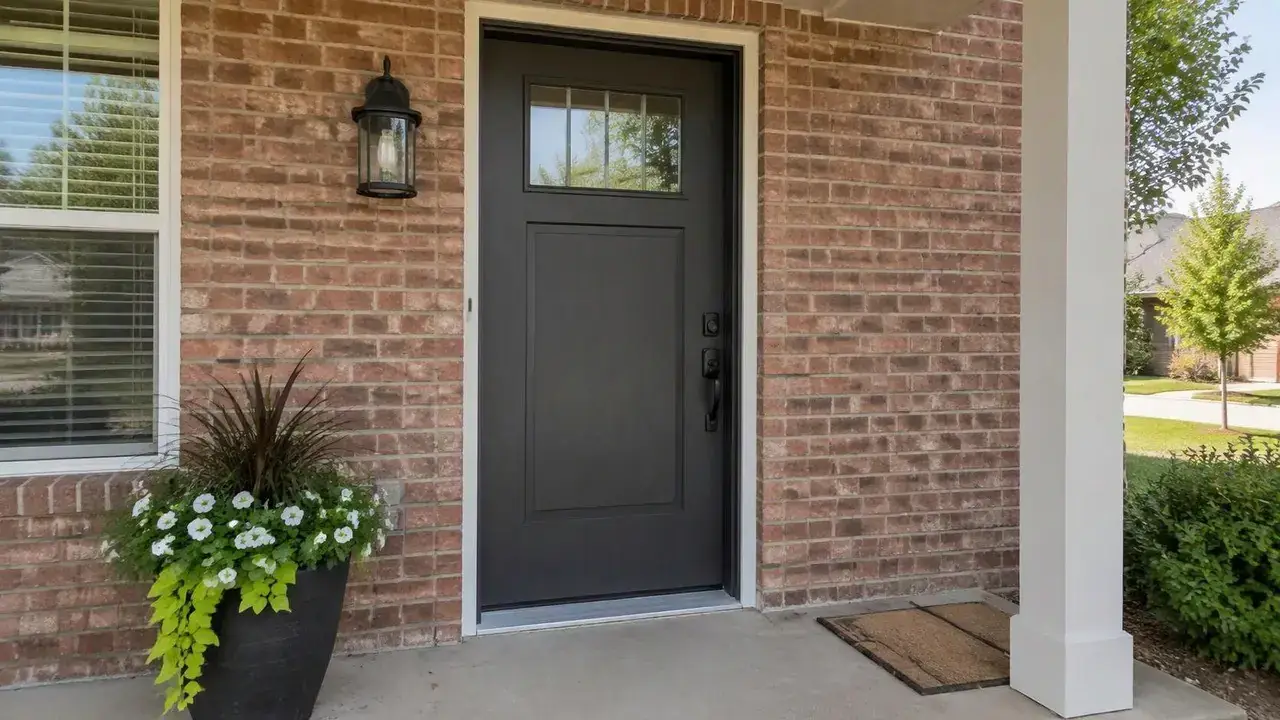
Steel is the value pick for front doors, and GTS Windows & Doors has been installing steel entry doors in Kitchener-Waterloo homes since 1986. An insulated steel door gives you strong security and a foam core that far outperforms an old wood slab, usually for noticeably less than a comparable fibreglass door. We fit them for homeowners, rental owners, property managers and builders across Waterloo Region, Guelph and the surrounding townships.
Not all steel doors are equal, though. Skin thickness, core, edge construction and frame decide whether a steel door stays flat, warm and quiet for decades or starts to frost, dent and rust within a few winters. Builder-grade steel doors often fail early for exactly those reasons, which is why we insist on the quality details covered further down this page.
This page goes deep on steel alone: what to look for, the honest drawbacks, and how we install steel doors in older, out-of-square openings. If you are still weighing materials, our front door replacement page compares steel, fibreglass and wood side by side, and you can browse every door type on our exterior doors overview. Each install is backed by our 20-year parts and labour warranty, and we are licensed, insured and WSIB covered.
A steel skin bonded to a rigid foam core resists kicking and prying far better than an older panelled wood door. Paired with a reinforced frame and a solid deadbolt, it is a very hard door to force.
Polyurethane foam is injected between the skins, bonding them into a stiff, insulated panel. A quality foam-core steel door insulates several times better than a solid wood slab of the same thickness.
Steel is the least expensive way to get an insulated, secure, factory-finished entry door. The savings often cover sidelights, better glass or a multi-point lock.
Two steel doors can look identical in a showroom and perform very differently in a February cold snap. These are the details we check before recommending one.
The frame matters as much as the slab. We favour rot-resistant composite or PVC-clad jambs and an adjustable, thermally broken sill, so the weakest parts of an old wood-framed door are not carried over.
Many residential steel doors use 24-gauge skins, while better doors move to 22 or 20 gauge, and a lower number means thicker steel. Thicker skins resist dents from hockey pucks, strollers and hail. We also look for galvanized steel under a baked primer and finish, the first defence against rust.
Look for foamed-in-place polyurethane rather than glued-in polystyrene blocks. Polyurethane fills every cavity and bonds to both skins, which stiffens the door and keeps it from flexing or oil-canning. Large glass inserts reduce the benefit, so any glass should be low-E or triple glazed.
On cheap steel doors, metal wraps around the edge and carries cold straight to the inside skin. In a deep freeze, that shows up as frost or even ice along the inside lock edge. Better doors use wood or composite edges and a thermal break so the inner and outer skins never touch.
Steel doors come in flush, two-panel, four-panel, six-panel and shaker profiles embossed into the skin, plus Craftsman styles with a glass top lite and dentil shelf. Most arrive factory painted, and we coordinate the exterior capping colour with the door.
Glass runs from small half-moon and fan lites to full-length inserts, in clear, frosted, textured or decorative patterns. Blinds sealed between the panes give adjustable privacy without cords or dusting.
Widely available steel door lines come from manufacturers such as Masonite, Novatech and Jeld-Wen. We quote the product that suits your opening, exposure and budget rather than pushing a single line.
Steel dents, and a sharp crease in a steel skin cannot be pushed back out. Small dings can be filled and painted, but a badly creased door usually means a new slab.
Rust only starts where the coating is broken, typically at the bottom edge where salt and meltwater sit, or at a scratch that was never touched up. Keeping the bottom rail and sweep sealed and painting chips quickly prevents most of it.
Steel also transmits sound more than a heavy wood door, and a thin 24-gauge skin can boom when it is closed hard. A thicker skin and a dense foam core quiet it down noticeably.
Steel conducts heat as well. A dark steel door facing south or west gets hot to the touch in July, and hotter still if a clear glass storm door traps sun against it, which can blister paint and void the finish warranty. If you also want a storm door, choose a vented model from our screen and storm doors options.
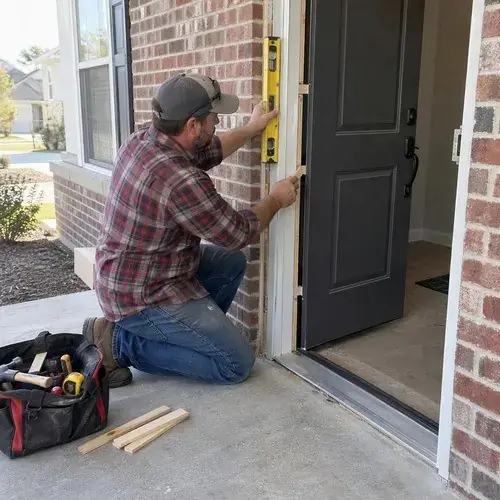
Steel doors are unforgiving of a crooked frame. A wood door can be planed to fit an out-of-square opening, but a steel slab cannot, so the opening itself has to be made right.
In older Kitchener, Cambridge and Guelph homes it is common to find openings that have settled out of square, sills rotted by years of standing water, and brick mould nailed into soft framing. We correct the rough opening, replace rotted subfloor and sill framing, and install a new sill pan before the door goes in.
Where the opening is not a standard size, we order the door to fit rather than packing the gap with wide shims and trim. If your home is a heritage property where steel would look out of place, a wood entry door may be the better fit.
These are typical 2026 installed prices in Waterloo Region, including removal, insulation, interior casing and disposal. Skin gauge, glass, multi-point hardware, colour and any frame or rot repairs move the price within each range.
Our window and door cost guide shows how steel compares with other door types and what to look for in an itemized quote.
| Steel door package | Typical installed price |
|---|---|
| Steel slab only, fitted to an existing frame | $900 to $1,800 |
| Pre-hung steel door, solid or small lite | $2,000 to $3,000 |
| Pre-hung steel door with decorative glass insert | $2,600 to $3,800 |
| Steel door with one sidelight | $3,500 to $5,000 |
| Steel door with two sidelights | $4,200 to $6,500 |
Slightly, in the skin itself, but that rarely decides the outcome. Forced entries through front doors usually happen at the frame, where the strike tears out of a thin jamb. A fibreglass entry door with a reinforced strike, long screws and a multi-point lock is more secure than a steel door hung in a weak frame.
Only where the galvanized coating and paint are damaged. The usual spots are the bottom edge and chips near the handle or kick zone. Touching up scratches promptly and keeping the bottom sweep sealed keeps a steel door rust-free for decades.
Yes. Factory finishes rated for dark colours hold up well in open sun. The risk comes from adding a clear glass storm door over a dark door on a south or west wall, which traps heat, so choose a vented storm door or skip the glass.
A well-installed steel entry door typically lasts 20 to 30 years, often longer on a covered porch. The weatherstrip and sweep wear out first and are inexpensive to replace. Doors that fail early usually do so from rust at an unsealed bottom edge or from a frame that was never properly shimmed.
Book an on-site measure and we will check your opening, recommend the right gauge, glass and hardware, and send a written quote.
Call or text226-806-0597