Get your written quote
Setting, protecting and preserving art glass
Stained Glass Window Installation in Waterloo Region
GTS Windows & Doors installs stained and leaded glass for homeowners, churches, heritage property owners and businesses across Kitchener, Waterloo, Cambridge, Guelph, Elora and the surrounding townships. We have worked on windows in this region since 1986, and we treat art glass as the most delicate and irreplaceable part of any opening. Our crews are licensed, insured and WSIB covered.
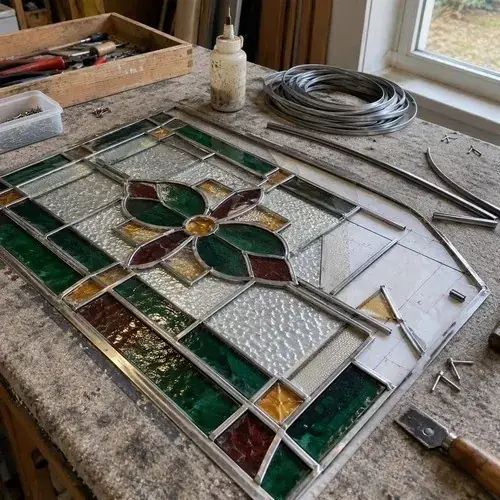
Our work covers the window side of the job: fitting panels into new or existing frames, adding protective glazing, building sealed units around decorative glass and repairing the frames that hold it. Where a panel needs re-leading, matched replacement glass or full restoration, we coordinate with a specialist stained glass studio rather than doing that bench work ourselves. We handle the parts a studio usually cannot, such as removing panels safely, closing up the opening while the glass is away and reinstalling it once the work is done.
That split keeps each part of the job with the right trade, while you deal with one contact from the first measure to the final clean-up. Whether you are protecting an original transom in a century home, moving a family panel into a new window or adding art glass to a new front entrance, we plan the installation around the glass rather than the other way round. Every quote spells out the protection method, glass specification and access plan in writing.
- Since 1986Four decades in Waterloo Region
- 20-Year WarrantyParts and labour, in writing
- Licensed & WSIBFully insured crews
- ENERGY STARRated windows and doors
- SAWDAC MemberIndustry association
Installing Stained and Leaded Glass Panels
A leaded panel is far more flexible than plate glass, so it needs even support and a frame that stays dry. We set panels on setting blocks in the glazing rebate, bed them in a compatible glazing compound or sealant, and secure them with stops rather than fasteners through the lead.
Larger panels rely on horizontal support bars, tied to the panel at soldered joints, to resist wind pressure and sagging. Existing bars are kept or duplicated where possible, since they are often part of the original design.
We also build or adapt frames to suit a panel, including arched, round and odd-shaped openings. Our custom window work handles shapes that standard units cannot, and when a new window is part of the job we match it from our full range of windows.
Before quoting, we check:
- Panel size, weight and whether it sits flat
- Condition of the lead came, solder joints and cement
- Rot, paint failure or movement in the surrounding frame
- Whether the panel will face the room, the outdoors or sit behind protective glazing
- Access, including ladders, scaffolding or lifts for tall church windows
Stained Glass in Century Homes and Churches
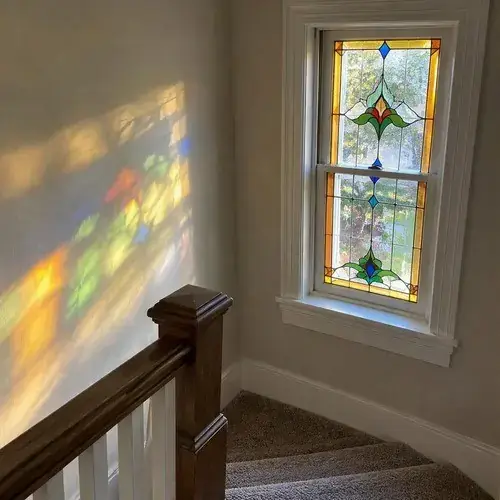
Waterloo Region and Wellington County have a large stock of late 1800s and early 1900s buildings, and many still have their original art glass. Common spots include transoms over front doors, stairwell landings, sidelights, parlour windows and the tall lancet windows of older churches.
Kitchener's Victoria Park and Civic Centre neighbourhoods, and the older cores of Galt, Waterloo, Guelph and Elora, have many homes from this era. Plenty of their stained glass is now more than a century old.
At that age the original putty, lead and wooden frames are near the end of their life. The right approach is usually to protect and stabilise the glass, not replace it.
Typical problems in panels of this age include sagging stairwell windows, pieces cracked by years of house settling, and exterior putty and paint that no longer shed water. Most can be stabilised if they are caught before the frame starts to rot.
Protective Glazing Over Stained Glass
Protective glazing is an outer layer of clear glass or polycarbonate installed outside a stained glass window. It shields fragile panels from wind pressure, hail and vandalism, and it adds a useful layer of insulation.
Clear, low-iron glass keeps the art glass visible from the street. We avoid polycarbonate on most homes because it yellows, scratches and hazes with age, although it can make sense where vandalism is a serious risk.
A well-built protective glazing system has these features:
Vented vs Sealed Protective Glazing
Sealing the space between protective glazing and a leaded panel creates a small solar oven. On sunny days heat builds up behind the coloured glass, stressing the lead and drying out the cement that waterproofs it, while trapped moisture condenses and rots the wooden frame.
Conservation guidance, including the U.S. National Park Service's Preservation Brief 33 on historic stained and leaded glass, calls for venting that interspace. We leave screened vents at the top and bottom of the protective lite so air moves through and condensation dries out.
If you see fog or water droplets between your stained glass and its outer cover, the system is probably unvented and should be checked.
- Clear or low-iron glass, laminated where impact is a concern
- Its own frame or stop, never glazed directly against the lead
- Screened vents at the top and bottom of the air space
- A sloped sill so rain drains away from the stained glass frame
Stained Glass Inside Insulated Glass Units
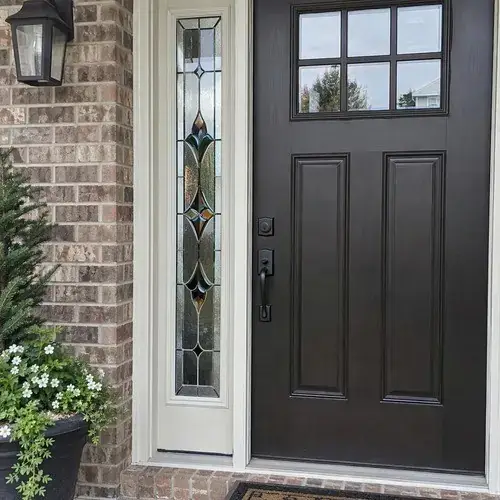
For new windows, doors and sidelights, decorative glass can be sealed between two panes of clear or tempered glass in a gas-filled insulating unit. The art glass stays clean and protected, and the unit insulates much like a standard double pane window.
This is how most decorative entry door glass is made today. It suits new leaded designs and some original panels, provided the panel is flat, clean and stable enough to be sealed in for decades.
Encapsulation is not right for every heritage panel, because it hides the original from touch and complicates future restoration. For front doors and sidelights with art glass, see our entry door replacement options.
Heritage Permits for Stained Glass
In Ontario, a property can be designated on its own under Part IV of the Ontario Heritage Act, or as part of a heritage conservation district under Part V. Altering windows on a designated property, including stained glass, often needs a heritage permit from the municipality before work starts.
Kitchener has four heritage conservation districts: Victoria Park, Civic Centre, St. Mary's and Upper Doon. Waterloo, Cambridge, Guelph and Centre Wellington keep their own heritage registers and rules.
Protective glazing and like-for-like repairs may be treated differently from replacement, so speak to heritage staff early. Our permits and heritage guide explains when a permit applies and how the process works.
Caring for Stained Glass Windows
A little routine attention adds decades to a leaded panel. Once or twice a year, check the following:
- Clean gently: use a soft cloth with plain or distilled water and avoid ammonia and vinegar cleaners. Leave painted or flaking glass alone and ask a studio first.
- Watch for bowing: a panel that bulges or leans out of its frame has lost support and needs attention before glass cracks.
- Check the lead: white powder, cracked joints or came pulling away from the glass point to fatigue, and most panels need re-leading roughly once a century.
- Listen for rattles: a gentle tap that produces a rattle means the waterproofing cement has failed.
- Inspect the frame: peeling paint, soft wood and failed putty let water in, and our wood window frame repair service deals with rot before it reaches the panel.
- Keep vents clear: if you have protective glazing, make sure its vents are free of paint, dirt and insect nests.
More Windows Services
- Window InstallationWindow installation in Kitchener-Waterloo for new homes, additions and new openings.
- Window ReplacementWindow replacement in Kitchener-Waterloo, retrofit or full-frame, since 1986.
- Custom WindowsCustom windows in any shape, size or colour for Kitchener-Waterloo homes.
- Insulated WindowsEnergy efficient windows installed in Kitchener-Waterloo.
- Triple Pane WindowsTriple pane windows: are they worth it for your home? Honest comparisons, typical costs and careful triple pane installation across Kitchener-Waterloo.
- Low-E Glass WindowsLow-E glass keeps heat inside in winter and cuts glare and fading in summer.
Stained Glass FAQs
Can stained glass windows be made energy efficient?
Yes, within limits. Vented protective glazing adds an insulating air layer and stops drafts through the lead, while sealing a panel inside an insulating unit brings it close to a standard double pane window. Either route is far warmer than a bare single-glazed leaded panel.
Can you reinstall my original stained glass in a new window?
Often, yes. We can build a new window or frame with the original panel set on the room side, behind a new insulating unit, or have the panel sealed into a unit if it is stable enough. A stained glass studio checks and repairs the panel first where needed.
Do I need a heritage permit to change stained glass windows?
It depends on designation. If the property is individually designated or sits in a heritage conservation district, changing or removing original stained glass usually needs a heritage permit, while some repairs may not. Check with your municipality's heritage planner before work starts.
How much does stained glass installation cost?
It depends on panel size, the protection method and access. As typical 2026 ranges, setting a supplied panel into an existing opening runs about $300 to $900, vented protective glazing about $400 to $1,200 per window, and a custom sealed unit with encapsulated art glass about $700 to $2,000. Tall church windows that need scaffolding or lifts are quoted individually.
Discuss Your Stained Glass Project
Send photos of the panel and the opening with your quote request, and we will talk through the options before visiting to measure.
Call or text226-806-0597- Monday to Saturday: 7:00am to 9:00pm
Sunday: 9:00am to 5:00pm - 47 Bridge Street East, Kitchener, ON N2K 1J7