Skip to content

Privacy, glare and heat control without replacement

Window Tinting and Privacy Film in Kitchener-Waterloo

GTS Windows & Doors installs window film and tinting for homes, offices, storefronts and rental properties across Kitchener, Waterloo, Cambridge, Guelph and the surrounding townships. As a window company working in the region since 1986, we look at the glass and the sealed unit behind the film, not just the film itself, and we can repair or replace the window when the glass turns out to need it. Our installers are licensed, insured and WSIB covered.

Window film is a thin polyester layer bonded to existing glass. Depending on the product, it adds privacy, blocks solar heat and glare, cuts ultraviolet light, decorates plain glass or holds broken glass together, often for a fraction of the cost of new windows. It is also removable, which suits renters, landlords and businesses in leased space.

We work with homeowners solving a single bathroom window, property managers upgrading office glazing and retailers who need frosted bands or logos on storefront glass. Before we recommend any film, we check the glass type, the direction the window faces and your window warranty, because the wrong film on the wrong glass can crack a pane or shorten the life of a sealed unit. Where film is the wrong answer, such as on a drafty or fogged window, we will say so and quote the proper repair instead.
Types of Window Film

Films are built for different jobs, and many projects combine two or more types in the same building. These are the four main families we install.

Privacy and Frosted Film

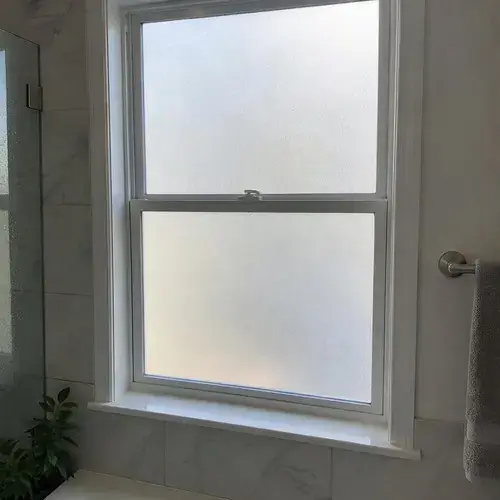
Frosted and matte films diffuse light, so you keep the daylight but lose the view in. They suit bathrooms, street-facing bedrooms, front door sidelights and office partitions, and they work the same day and night.

Blackout and one-way mirror films are available where full privacy or daytime reflectivity is the goal.

Solar Control and Heat-Reduction Film

Solar films use dyes, metals or ceramic particles to reject part of the sun's heat and glare. They work best in west-facing rooms, sunrooms and home offices that overheat in the afternoon.

Ceramic and spectrally selective films reject heat while staying fairly clear, which avoids the mirrored look of older reflective tints.

Decorative Film

Patterns, gradient frosts, etched-glass looks, stripes and printed graphics add style and partial privacy. Gradient films that fade from frosted at the bottom to clear at the top are popular for bathrooms and meeting rooms.

Safety and Security Film

Thicker clear films, typically 4 to 14 mil, bond to the glass and hold the shards together if it breaks. They slow down smash-and-grab entry and reduce injury risk, but they do not make glass unbreakable.

For the best security performance, heavier films are anchored to the frame with a structural sealant or attachment system.

Window Tinting for Homes

Most residential film jobs fix one room's problem rather than covering the whole house. Many homeowners start with a single problem room and add others once they have lived with the result.

Film is not a cure for worn-out windows. If glass is fogged, frames are drafty or sashes will not close, those issues come first, since film only adds cost to a window that is due for replacement.

Typical residential requests include:

  • Frosting bathroom windows without losing natural light
  • Privacy for ground-floor bedrooms and basements that face the street or a neighbour
  • Cutting afternoon heat and TV glare in west-facing family rooms and home offices
  • Reducing fading on hardwood floors and furniture near large patio doors
  • Adding privacy to front door sidelights and transoms
  • Safety film on large low glass near stairs or play areas
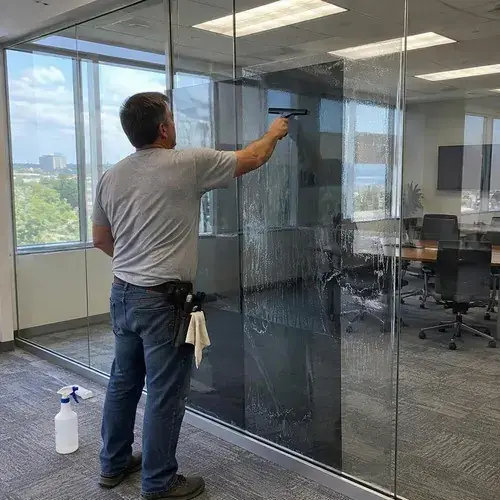
Man squeegees window film onto a large glass partition wall in a bright office

Commercial and Storefront Window Film

In offices and retail spaces, film solves glare on screens, overheating in glass-heavy rooms and privacy in meeting rooms. Frosted bands at eye level across glass partitions and doors also make the glass easier to see, which helps prevent people walking into it.

Storefronts often use a mix: clear solar or UV film to protect merchandise from fading, decorative film with logos or opening hours on the door, and security film on vulnerable ground-floor glass. We can schedule commercial installs for early mornings or evenings to limit disruption.

For new or replacement glazing in commercial buildings, see our commercial windows and doors services.

White double-hung bathroom window with frosted privacy film or glass beside tiled wall and

Can Window Film Void Your Window Warranty?

It can. Films that absorb a lot of solar energy raise the temperature of the glass they are applied to, and on insulated double or triple pane units that adds thermal stress to the glass and extra strain on the edge seal.

Some window and glass manufacturers exclude seal failure or thermal breakage once aftermarket film is applied, while others allow approved films. Film makers publish film-to-glass application guides that list which films are safe on clear, tinted, Low-E, laminated and tempered glass, and some offer their own seal failure coverage when those rules are followed.

Before quoting, we identify your glass type, check the window maker's warranty terms and choose a film approved for that glass. If GTS installed your windows, ask us before applying any film so your window warranty stays intact.

  • Highest risk: dark or highly absorbent film on large, sunny panes of ordinary annealed glass
  • Extra care needed: partly shaded glass, where uneven heating builds stress across the pane
  • Check first: existing Low-E units, which already absorb or reflect some solar energy
  • Lower risk: light frosted films and many clear ceramic and security films
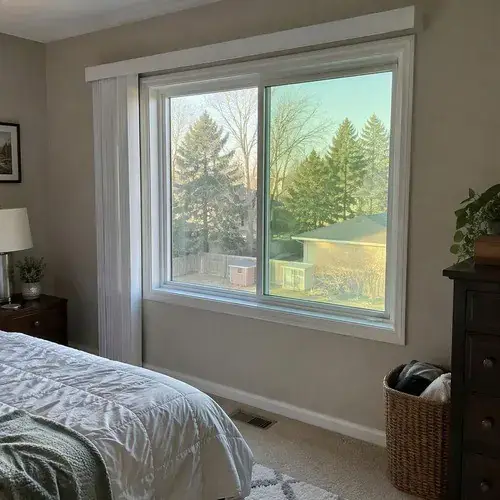
White sliding window with two panes in a bedroom wall

How Window Film Is Installed

01

Assess the Glass

We confirm the glass type, check for chips, scratches or seal failure, and measure each pane. Film will not hide damage, and a unit with foggy double pane glass should be fixed first.

02

Clean and Prepare

The glass is scraped with a razor blade, washed and detailed at the edges so no dust, paint flecks or silicone are trapped. Most film flaws trace back to poor preparation.

03

Cut and Apply

Film is cut slightly oversize, applied wet with a slip solution and trimmed to leave a small, even gap at the frame. That gap stops the edge lifting as the glass expands and contracts.

04

Squeegee and Seal

We squeegee the water and air out from the centre toward the edges, then make a final pass along every edge.

05

Cure

Film needs time to dry fully, often 2 to 4 weeks and longer in cold weather. Small hazy patches or water pockets during curing are normal, and the film should not be cleaned for about 30 days.

What Window Film Costs

Film is priced by the square foot of glass covered, with the film type making the biggest difference. These are typical 2026 installed ranges in Waterloo Region.

Most film jobs carry a minimum charge, commonly several hundred dollars, so one small window costs more per square foot than a full room. Removing old film, high glass that needs ladders or lifts, and custom-cut decorative designs all add time.

For larger commercial jobs we price by elevation after measuring every pane. The quote lists the film type and square footage for each area, so you can phase the work if needed.

Film typeTypical installed priceNotes
Frosted or privacy film$8 to $15 per sq ftQuick to install, works day and night
Dyed or metallized solar film$8 to $12 per sq ftEntry-level heat and glare control
Ceramic or spectrally selective solar film$12 to $18 per sq ftClearer look, better heat rejection
Decorative and printed film$12 to $25 per sq ftCustom cuts and logos cost more
Safety and security film$12 to $22 per sq ftFrame anchoring is extra
Old film removal$3 to $7 per sq ftSun-baked film takes longest

Window Film FAQs

Does window film really reduce heat?

Yes. Good solar films reject a large share of the sun's heat, and premium ceramic and reflective products are rated to block well over half of total solar energy. Compare the total solar energy rejected (TSER) figure on the specification sheet rather than how dark the tint looks. Standard solar film does little for winter heat loss unless it is a Low-E film designed for that job.

Can people see through privacy film at night?

It depends on the film. Frosted and opaque films give privacy day and night. Reflective one-way films only work while it is brighter outside than inside, so after dark with the lights on, people can see in, and you will want blinds or a frosted film instead.

Can window film be removed later?

Yes. Most films peel off after softening with a steamer or heat gun, and the leftover adhesive comes off with a soapy solution and a razor scraper. Older, sun-baked film takes longer, and coated glass needs extra care so the coating is not scratched.

Is window tint safe on double pane windows?

Usually, if the film is approved for your glass. Light privacy films and many clear security and ceramic films are low risk, while dark or highly absorbent films on large, sunny double pane units carry more risk of seal failure or thermal cracking. We check the film maker's glass chart and your window warranty before installing, and for the heat problem itself, Low-E glass windows may be the longer-term fix.

Get a Window Film Quote

Tell us which windows need privacy, shade or protection, and we will recommend a film that is safe for your glass. Quotes include measurements and film specifications for every pane.

Call or text226-806-0597
Monday to Saturday: 7:00am to 9:00pm
Sunday: 9:00am to 5:00pm
47 Bridge Street East, Kitchener, ON N2K 1J7
Call 226-806-0597Quote