Skip to content

ENERGY STAR windows built for Waterloo Region winters

Insulated, Energy-Efficient Windows in Kitchener-Waterloo

GTS Windows & Doors has installed insulated windows in Kitchener, Waterloo, Cambridge and Guelph homes since 1986. We supply and fit ENERGY STAR certified units for homeowners, landlords, property managers, general contractors and builders across Waterloo Region, Wellington County and the townships in between. Our crews are licensed, insured and WSIB covered, and every installation carries a 20-year parts and labour warranty.

An energy efficient window is not one feature you tick on an order form or a single upgrade added at the end of a quote. It is a sealed glass unit, a gas fill, a spacer, an insulated frame and an airtight joint to the wall, all working together. When one link is weak, such as a leaky gap around the frame or a cold aluminum spacer, the rating on the sticker stops telling the real story of how the window performs in your wall.

Local winters are why this matters so much here. Long heating seasons, cold snaps below minus 20 °C and dry indoor air quickly expose drafty or poorly sealed windows, whether in a century home near downtown Kitchener or a 1990s subdivision in Cambridge. This page explains how to read window energy ratings, which glass upgrades earn their cost, how installation affects performance and what savings are realistic, so you can compare quotes from any company with confidence.
What Makes a Window Insulated

Think of an insulated window as a system of six parts, each blocking a different path for heat. Heat escapes by conduction through glass and frame, by convection inside the glass cavity, by radiation across it and by air leaking around the sash.

Whichever window style and frame material you choose, these same parts decide how warm it keeps your home.

Sealed Glass Unit

Two or three panes are bonded to a spacer and sealed at the edges, trapping a still layer of gas between them. The sealed space, not the glass, does most of the insulating. When that seal fails, fog appears between the panes and the insulating value drops.

Gas Fill

Argon or krypton replaces the air inside the unit. Both gases are denser and less conductive than air, so they slow heat moving across the cavity.

Low-E Coating

A microscopically thin metallic coating reflects room heat back indoors. It is the biggest single contributor to a modern window's rating, and our Low-E glass guide covers coating types in depth.

Warm-Edge Spacer

The spacer holds the panes apart around the perimeter. Low-conductivity spacers keep the edge of the glass warmer than the old aluminum type.

Multi-Chamber Frame

Vinyl and fibreglass frames are hollow profiles divided into chambers, sometimes foam filled, to slow heat through the frame itself. Frame and sash make up a real share of every window, so a cold frame drags down a good glass package.

Air Seal

Compression weatherstripping seals the sash to the frame, and the installer seals the frame to the wall. ENERGY STAR caps air leakage through the window, but the seal to the wall is entirely down to installation quality.

Reading Window Energy Ratings

Canadian window labels and quotes show a few numbers that are easy to mix up. Knowing what each one measures lets you compare two quotes on equal terms instead of trusting phrases like high performance.

U-Factor

U-factor measures how fast heat escapes through the whole window, in watts per square metre per degree (W/m²·K). Lower is better. Older double pane windows with clear glass typically sit around 2.7 to 3.0, an ENERGY STAR model qualifying on U-factor is 1.22 or lower, and quality triple pane units often reach 0.8 to 1.0.

Some product literature uses imperial units instead. For reference, 1.22 W/m²·K equals about 0.21 Btu/h·ft²·°F.

Energy Rating (ER)

The Energy Rating is a Canadian metric that combines heat loss, air leakage and free solar heat gain into one number for a standard-sized window. Higher is better, and a window certifying by ER needs a rating of 34 or more.

Because ER rewards solar gain, two windows with the same U-factor can carry different ERs. A high-ER unit is excellent on a sunny south wall but can overheat a west-facing room in July.

ENERGY STAR Canada: One National Standard

Under Version 5.0 of NRCan's ENERGY STAR specification for windows, doors and skylights, in force since January 1, 2020, Canada no longer uses separate climate zones. A window or door qualifies anywhere in the country with a U-factor of 1.22 or lower, or an ER of 34 or higher, plus air leakage of no more than 1.5 L/s/m².

Waterloo Region homes therefore follow the same bar as the rest of Canada, and quotes that still mention Zone 2 or Zone 3 are using the pre-2020 system. The full criteria are in the NRCan ENERGY STAR technical specification.

Argon, Krypton and Warm-Edge Spacers

Argon is the standard fill in ENERGY STAR units because it is inexpensive and performs well in the cavity widths typical of double pane glass, roughly 12 to 16 mm. Krypton insulates better in narrow gaps, so it appears mainly in slim triple pane units where frame depth limits the cavity. It costs noticeably more, and we suggest it only when a thin unit has to hit a demanding target.

Spacers matter most at the bottom edge of the glass, where winter condensation and frost appear first. Aluminum spacers conduct cold straight to the inside edge, while warm-edge spacers made from structural foam, stainless steel or thermoplastic keep that edge warmer. Examples on the market include Super Spacer and Endur IG.

Here is where each upgrade tends to earn its cost:

  • Argon: worth it on nearly every window, and already standard in most certified units.
  • Krypton: worth it in slim triple pane units or where frame depth limits cavity width.
  • Warm-edge spacer: worth it everywhere, and most noticeable in bathrooms, bedrooms and other humid rooms.
  • A third pane: worth it on north walls, large glass areas and rooms prone to condensation.
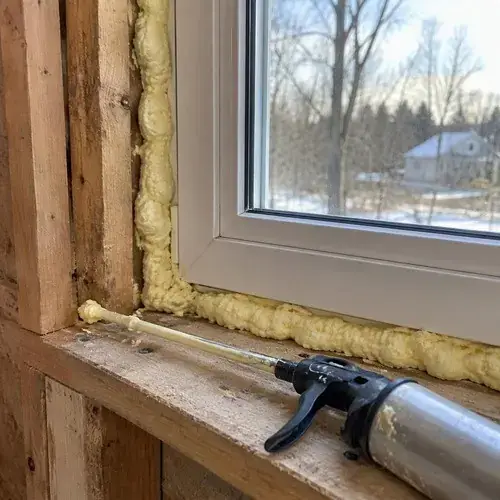
Spray foam insulation being applied with a foam gun in the gap between a

Why the Installation Matters as Much as the Glass

A certified window is tested in a lab as a complete unit. On site, air can still leak through the gap between the frame and the rough opening, and that leak bypasses every number on the label.

We seal that gap with low-expansion window foam, backer rod and exterior sealant, then tie the frame into the wall's air and vapour barrier. Sills get flashing or a sill pan so water drains out rather than into the wall.

Ordinary expanding foam can bow a vinyl frame and bind the sash, so we only use foam rated for windows. Our window installation process walks through each step in detail.

Signs that an existing install is leaking air:

  • Cold drafts you can feel at the interior trim on windy days
  • Frost or ice forming on trim corners rather than on the glass
  • Whistling around the frame in strong wind
  • Dark dust lines on caulking or drywall returns where air has been moving
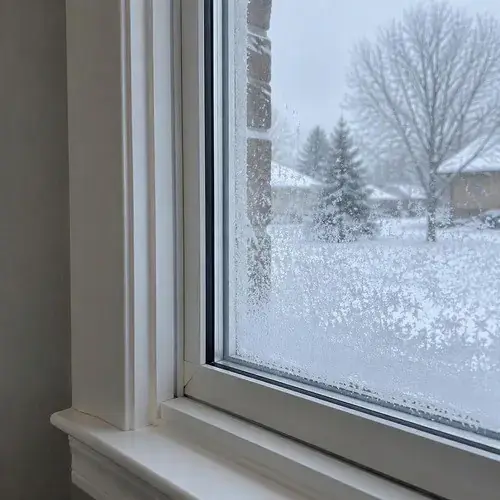
Close-up of white window frame with frost crystals on the glass looking out at

What Savings to Expect

Energy savings from new windows are real but modest, and anyone promising to halve your heating bill is overselling. NRCan's ENERGY STAR material has estimated typical savings of about 8 percent on annual household energy costs when older windows are replaced with certified models.

Your result depends on what you are replacing. Swapping single pane glass or failed sealed units in a drafty 1950s bungalow gains far more than replacing 15-year-old double pane windows that still seal well.

For most households the bigger payoff is comfort: warmer glass, no drafts near the sofa and less condensation on the sills. Payback on energy alone is usually long, so weigh comfort and window condition alongside the bill.

What you replaceWhat typically changes
Single pane windows or old storm combinationsLarge comfort and energy gain, with frost and drafts largely gone
Fogged or failed double pane unitsNoticeable gain, though glass-only replacement may suit sound frames
Sound 1990s to 2000s double pane windowsSmaller energy gain, so replace for condition, style or comfort

Rebates for Energy-Efficient Windows

Ontario's Home Renovation Savings Program has offered $100 per rough opening for windows and doors replaced with ENERGY STAR certified models. It requires a home energy assessment before work starts and at least two qualifying upgrades, and the window upgrade needs a minimum of three window openings or one door.

Eligibility also depends on how your home is heated and which utility serves it, and program rules and deadlines change. Kitchener Utilities natural gas customers in particular should confirm eligibility before booking an assessment.

Our window rebate guide keeps the current rules in one place. We supply the ENERGY STAR model numbers and invoice details that programs ask for.

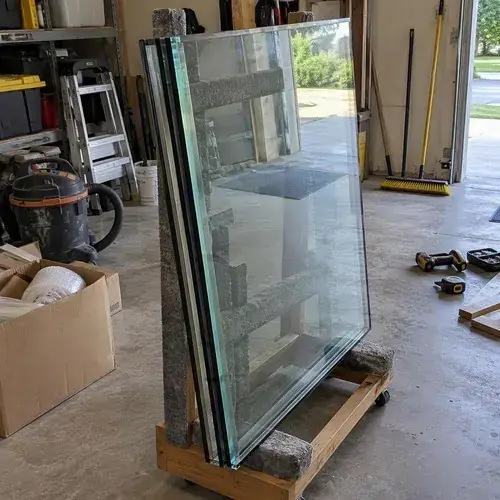
Stack of insulated glass units on a wooden cart in a garage with tools

Energy-Efficient Window FAQs

Are ENERGY STAR windows worth it in Ontario?

For most homes with windows over 20 to 25 years old, yes, mainly for comfort. Certified windows keep the inner glass warmer, which cuts drafts and condensation, and they trim heating costs modestly. Many quality windows sold in Ontario already meet ENERGY STAR, so the premium is often small.

Double or triple pane for Canadian winters?

A well-specified double pane window with Low-E, argon and a warm-edge spacer meets ENERGY STAR and suits most rooms. Triple glazing earns its extra cost on north-facing walls, large glass areas and humid rooms. Our page on triple pane windows explains where it pays off.

Why do my new windows have condensation on the inside?

Condensation on the room side of new glass comes from indoor humidity meeting cold glass, not from a defective window. Tighter new windows also stop the air leaks that used to dry the house out, so humidity often rises after an install. Run bathroom and kitchen fans, open blinds at night so warm air reaches the glass, and turn down any humidifier during cold snaps. Moisture between the panes is different and does mean a failed seal.

Do insulated windows qualify for a rebate?

They can, if the exact model is ENERGY STAR certified and you meet the program rules, including the energy assessment before work begins. Frame material does not affect eligibility, only the certification of the model. We list certification details on your quote so you can apply.

Upgrade to Energy-Efficient Windows

Book an on-site measure and we will compare glass packages, ratings and prices for each opening. Your written quote includes the ENERGY STAR model details.

Call or text226-806-0597
Monday to Saturday: 7:00am to 9:00pm
Sunday: 9:00am to 5:00pm
47 Bridge Street East, Kitchener, ON N2K 1J7
Call 226-806-0597Quote