Skip to content

The right seal profile, matched to your window

Window Weatherstripping Replacement in Kitchener-Waterloo

Window weatherstripping is the compressible seal between an opening sash and its frame, and replacing it is often the cheapest way to stop a draft. GTS Windows & Doors has been replacing worn seals on casement, awning, slider and hung windows across Kitchener-Waterloo since 1986. We work for homeowners, landlords, property managers and builders throughout Waterloo Region, Guelph and Wellington County.

The catch is that weatherstripping only works when the new seal is the right profile. Window makers use dozens of different bulbs, fins, piles and kerf sizes, and a generic foam strip from the hardware store rarely seals properly or survives more than a season or two of opening and closing. Matching the original profile, or the closest modern equivalent, is where most of our effort goes, because a seal that is a few millimetres off either leaves a gap or stops the sash from closing.

This page covers the seals on the moving parts of the window. The fixed sealant joint between the frame and the wall is a separate job, handled by our window caulking and sealing service, and both sit within our full window repair offering. Our crews are licensed, insured and WSIB covered, and every job starts with a written quote.
How to Tell Your Weatherstripping Is Worn

A simple test: close the window on a strip of paper and pull it out. If it slides out with no resistance at several points around the sash, the seal is not making contact there.

Before blaming the seal, check that the lock pulls the sash fully closed. A lock that no longer engages produces the same symptoms, and that fix is covered on our window lock and latch repair page.

  • A draft you can feel along the edges of the sash, especially on windy days
  • Daylight visible around a closed sash when the room is dark
  • Whistling or rattling when the wind picks up
  • Frost or ice at the sash edge in winter, rather than spread across the glass
  • Flattened, cracked or missing seal when you open the window and look
  • Pile worn down to its backing on sliders and hung windows

Types of Window Weatherstripping

Seal type follows how the sash moves. Windows that press shut need a compression seal, and windows that slide need a seal that can be brushed past thousands of times.

Compression Bulb Seals

Casement and awning windows close by pressing the sash against the frame, so they use compression seals: hollow bulbs of EPDM, TPE or silicone, or foam-filled seals such as Schlegel's Q-Lon. Most casements have two lines of seal, one on the sash and one on the frame, and both need checking.

A bulb that has taken a permanent set stays flat and stops sealing even though it still looks intact.

Pile and Fin Seals

Sliders and hung windows move along their seals, so they use pile weatherstrip, a dense brush of fibres on a backing strip. Better versions have a thin plastic fin running through the pile, which blocks air far better than pile alone.

Pile is sized by backing width and pile height, and a strip even slightly too short leaves a gap the full length of the sash.

Kerf-Mounted vs Adhesive Strips

Most modern windows hold their seals in a kerf, a narrow slot in the sash or frame, with a barbed flange that presses in. Kerf-mounted seals stay put through years of use and can be replaced cleanly.

Adhesive-backed strips are a fallback where no kerf exists, and they tend to peel in cold weather, so we use them only where the window leaves no alternative.

Matching Seals to Your Window Brand

We start by identifying the window: the maker's label or glass marking where one exists, the frame material and the window type. Then we pull a short sample of the old seal, measure the kerf width, flange, bulb or pile height, and match it against profile catalogues from seal makers such as Schlegel and Ultrafab.

Where the original profile is discontinued, we find the closest one that fills the same gap without making the sash hard to close. Too large a bulb can stop a casement from locking and too tall a pile can make a slider stiff, so we test fit one window before doing the whole house.

Windows we commonly reseal:

  • Vinyl casements and awnings from the 1990s onward
  • Aluminum and vinyl horizontal sliders
  • Single and double hung windows with tilt-in sashes
  • Original wood sashes in older homes
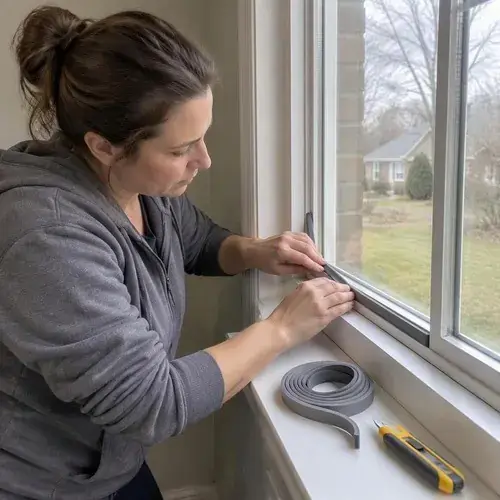
Woman pressing gray weather stripping seal into a white window frame at a sill

Sliders, Hung Windows and Window Styles

Slider seals are often replaced along with worn rollers and latches, which our sliding window repair service covers in the same visit. Hung windows get their pile replaced with the sashes tilted in or removed, so the seal runs continuously along each side.

If you are not sure whether your windows are casement, awning, hung or slider, our window styles guide shows the differences. Knowing the style tells us which seal family to bring.

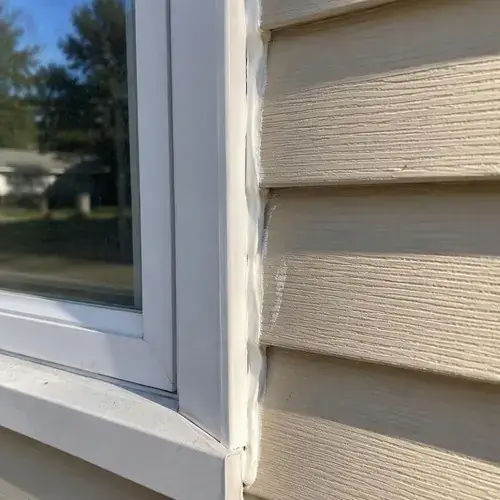
Close-up of white window frame corner with fresh caulk bead sealing the joint against

How We Replace Window Seals

01

Assess and sample

We check how each sash closes, confirm the lock pulls it tight and cut a short sample of the old seal for matching.

02

Strip and clean

Old seals are pulled from the kerf, and any leftover adhesive, paint or debris is cleaned out so the new flange seats fully.

03

Fit the new profile

New seal is cut slightly long and pressed in so the corners meet tightly without stretching, which would open gaps in cold weather.

04

Test and adjust

We close and lock every sash, run the paper test around the edge and adjust hinges or keepers where the new seal changes the fit.

Weatherstripping or Caulking: Which Do You Need?

Both fix drafts and leaks, but at different places. The quickest way to tell is to find exactly where the air or water is coming in.

Where the problem isLikely causeThe fix
Between the moving sash and the frameWorn, flattened or missing sealNew weatherstripping
At the sash edge, only on windy daysSeal gap or a lock not pulling tightNew seals, lock adjustment
Around the interior trimFailed perimeter air sealInterior sealing
Water stains below the windowFailed exterior sealant jointExterior caulking
Water pooling in the sill trackBlocked weep holesClear the drainage, not the seals

A Quick Draft Test You Can Do

On a windy day, hold a lit incense stick close to each joint of a closed window and watch the smoke. If it moves at the sash edge, the weatherstripping is the problem; if it moves at the trim, the perimeter seal is.

Many windows have both issues at once. We check the seals and the perimeter on the same visit and quote them separately, so you only pay for what is actually failing.

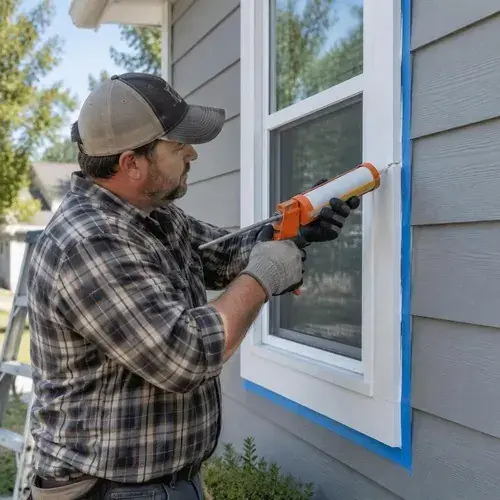
Worker in plaid shirt applying caulk with a gun around a white window frame

What Weatherstripping Replacement Costs

These are typical 2026 ranges for Waterloo Region, including seals and labour. Custom-sourced or discontinued profiles and second-storey access raise the price, while doing every window in one visit lowers the cost per window.

Our installations carry a 20-year parts and labour warranty, and your quote spells out the coverage on replacement seals.

JobTypical price (2026)What moves the price
Casement or awning, both seal lines$120 to $250 per windowProfile availability, sash size
Slider or hung window pile and fin$100 to $220 per windowNumber of sashes, sash removal
Original wood sash, retrofit seals$150 to $350 per sashRouting new kerfs, sash condition
Whole house, 10 to 20 windows$1,200 to $3,500Mix of window types, access

Weatherstripping FAQs

How long does window weatherstripping last?

Quality compression seals on casements often last 15 to 20 years, while pile on sliders and hung windows usually wears faster, often within 10 years on windows used daily. Sun exposure, harsh cleaners and paint on the seal all shorten its life. Seals on south and west windows tend to go first.

Will new weatherstripping fix a drafty window?

If the draft is at the edge of the moving sash, yes, in most cases. It will not fix air leaking around the trim, cold radiating from single glass, or a sash that no longer closes square. If a window has several of these problems at once, our guide on when to replace windows can help you weigh the options.

Can you weatherstrip old wood windows?

Yes. Original wood sashes can take modern seals, often by routing a small kerf into the sash or stop so a durable kerf-mounted seal replaces tacked-on strips. Any rot is repaired first, as described on our wood window frame repair page.

When is the best time to replace weatherstripping?

Late summer and early fall, before the heating season, when seals are warm and flexible and you get the benefit all winter. Replacement can be done in winter too, with windows open only briefly on cold days. Booking early in the fall avoids the pre-winter rush.

Book Weatherstripping Service

Send us a photo of the window and a close-up of the old seal, and tell us roughly how many windows are drafty. We will match the profile and quote the replacement in writing.

Call or text226-806-0597
Monday to Saturday: 7:00am to 9:00pm
Sunday: 9:00am to 5:00pm
47 Bridge Street East, Kitchener, ON N2K 1J7
Call 226-806-0597Quote