Skip to content

Quieter rooms near highways, rail and the LRT

Soundproof Windows for Kitchener-Waterloo Homes and Offices

GTS Windows & Doors installs noise-reduction windows for homeowners, condo and townhome owners, landlords and businesses across Kitchener, Waterloo, Cambridge and Guelph. Since 1986 we have fitted windows in houses beside busy arterial roads, rail lines and highways, and we have learned that real quiet comes from the whole assembly, not a sticker on the glass. Our crews are licensed, insured and WSIB covered, and our installations carry a 20-year parts and labour warranty.

No window makes a room truly soundproof, whatever the marketing says. What acoustic windows can do is cut traffic rumble, voices and horns enough that you sleep through the night and take calls without shutting yourself in a back room. The gains come from laminated glass, mismatched glass thicknesses and an airtight installation, working together.

We also specify acoustic glazing for commercial clients, including medical clinics, therapy rooms, law and accounting offices and reception areas facing busy streets. Whether it is a bedroom over a bus route or a boardroom beside an expressway, we start by working out what you are hearing and where it gets in, then quote the least expensive combination that will make a noticeable difference. We cover homes and offices throughout Waterloo Region and Wellington County, including Elmira, Breslau and New Hamburg, from our base in Kitchener's Bridgeport area.
Where Outside Noise Comes From in Waterloo Region

The type of noise shapes the fix, so identifying the source comes first. Low-frequency rumble from trucks, trains and aircraft is much harder to stop than higher-pitched voices, birdsong or lawn equipment.

These are the main sources behind noise complaints across the region:

  • Conestoga Parkway: the Highway 7/8 and Highway 85 expressway through Kitchener and Waterloo carries steady tire noise and heavy trucks day and night.
  • Highway 401 through Cambridge: constant truck traffic with deep, low-frequency rumble that travels into nearby neighbourhoods, especially on still nights.
  • ION light rail: trains run between Conestoga Station in Waterloo and Fairway Station in Kitchener, adding wheel noise, bells and crossing signals near stations and street-running sections.
  • Region of Waterloo International Airport: arrivals and departures can be heard in Breslau and nearby parts of northeast Kitchener and Woolwich.
  • Rail lines: GO Transit, VIA Rail and freight trains through downtown Kitchener and Guelph, including horns at level crossings.
  • Arterial roads: buses, motorcycles and delivery trucks on main roads such as King Street, Victoria Street and Weber Street.

How Acoustic Windows Reduce Noise

Sound passes through a window in two ways: by making the glass vibrate and by slipping through air gaps. Acoustic glazing is available in most of the window styles and frame materials we install, and it tackles both paths with three levers.

Laminated Glass

Laminated glass bonds two lites together with a plastic interlayer, usually PVB, and acoustic grades use a softer interlayer designed to damp vibration. Instead of ringing like a drum, the glass turns a little of the sound energy into heat.

As a bonus, laminated glass blocks almost all UV light and holds together if it breaks.

Different Glass Thicknesses

Every pane has a frequency at which it vibrates most easily, called its coincidence frequency. Pairing two different thicknesses, for example 4 mm with 6 mm laminated, stops both panes resonating at the same pitch, so one covers the other's weak spot.

A wider air space between the panes also helps, which is why acoustic units are often thicker than standard ones.

Airtight Seals and Frames

Sound follows air, so even small gaps let through a surprising amount of noise. Casement and awning windows that clamp shut with multi-point locks and compression seals block sound better than sliders, which rely on brush weatherstrip.

Understanding STC and OITC Ratings

STC, or Sound Transmission Class, was developed for interior walls and focuses on mid and high frequencies such as speech. OITC, or Outdoor-Indoor Transmission Class, gives more weight to low frequencies and is the better guide for traffic, trains and aircraft.

A higher number means less sound gets through. As a rough guide, an improvement of about 10 points is heard as outside noise becoming half as loud.

Ratings are measured on a complete window in a lab, so ask for tested whole-window figures rather than glass-only numbers. In your home, the result also depends on how well the frame is sealed and on the wall around it.

Window typeTypical STCTypical OITC
Single pane glassAbout 25 to 28Low 20s
Standard double paneAbout 26 to 32About 22 to 26
Triple pane with equal glassAbout 28 to 33About 24 to 28
Acoustic double pane (laminated, mixed thickness)About 34 to 40About 29 to 34

Acoustic Glass vs Triple Pane

A common assumption is that triple pane glass is automatically quieter. It helps a little, but three panes of the same thickness share the same resonant frequency, and two narrow air spaces do less for sound than one wider one.

A double pane unit with one laminated lite and mixed glass thicknesses often beats a standard triple pane unit on traffic noise. When warmth and quiet both matter, the best option is a triple pane unit that includes a laminated lite and varied thicknesses, which several manufacturers offer.

For the thermal side of that decision, see our guide to triple pane windows.

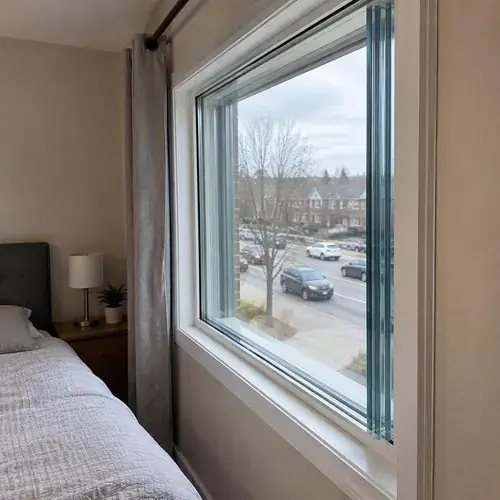
Large bedroom window with thick multi-layer glass looking onto a busy street

Sealing the Opening, Not Just the Window

An acoustic window set into a leaky opening performs like an ordinary one. The gap between frame and wall is often the weakest path for sound, especially in older homes where the original window was packed with loose fibreglass or nothing at all.

We fill that gap fully with low-expansion foam, then add backer rod and a continuous bead of sealant on both the exterior and interior sides. In century homes, hollow sash-weight pockets beside the old frame get insulated, because they carry sound straight past the new window.

That care is part of every professional window installation we do, but acoustic jobs get extra attention at corners, sills and trim joints.

Windows are rarely the only way noise gets in. During the measure we also point out other common leaks:

  • Bathroom fans and dryer vents without working backdraft dampers
  • Through-wall air conditioner sleeves and old mail slots
  • Worn weatherstripping and gaps under exterior doors
  • Unsealed attic hatches in rooms directly below a roof facing the road
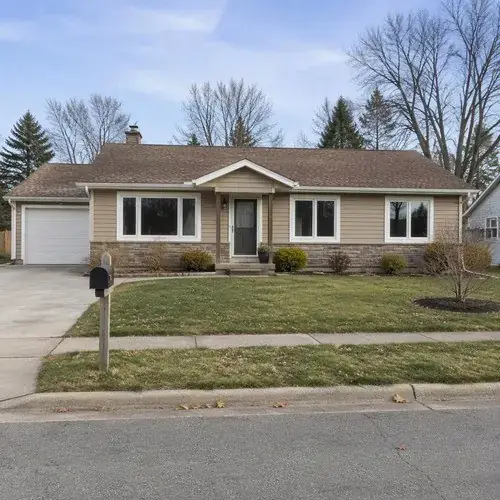
Front of a single-storey home with several new white-framed windows

Who Benefits Most From Noise-Reduction Windows

Acoustic glass costs more than standard glass, so it makes sense to put it only where it counts. Most homes need it on one or two elevations, not every window.

These are the situations where homeowners and businesses usually notice the biggest difference.

Bedrooms Facing Busy Roads

Night-time truck traffic and early buses disturb sleep more than daytime noise. Upgrading just the bedroom windows on the noisy side of the house is often the best value.

Home Offices

Video calls pick up traffic, sirens and lawn equipment. A quieter office window makes a real difference for people who work from home full time.

Condos and Townhomes Near Transit

Homes near the LRT, bus terminals and main roads face noise from several directions. Replacement is sometimes limited by condo rules, so check with your board before ordering.

Medical and Professional Offices

Clinics, counselling rooms and law offices need speech privacy and a calm setting. Our commercial window installation team specifies acoustic glazing for these spaces.

Noise-Reduction Window FAQs

Do soundproof windows block all noise?

No. Good acoustic windows can make outside noise sound roughly half as loud, but walls, vents, doors and the roof also carry sound. Very low-frequency rumble is the hardest to stop, and we will tell you honestly what a window change can achieve in your situation.

Are triple pane windows good for noise reduction?

Only slightly better than standard double pane. Equal-thickness panes resonate together and the air spaces are narrow. Laminated glass with mixed thicknesses does more, with or without a third pane.

Can acoustic glass go into my existing frames?

Sometimes. Acoustic sealed units are often thicker and heavier, so they only fit if the sash has enough glazing depth and hardware rated for the weight. If not, a new window is the better route, and it also lets us fix the air seal around the frame.

How much do noise-reduction windows cost?

Expect a premium of roughly $150 to $500 per window over a standard ENERGY STAR unit, depending on size, laminated lites and glass thickness. A typical installed acoustic replacement window in Waterloo Region runs about $1,100 to $2,200. Our window and door cost guide covers base window prices.

Request a Noise-Reduction Window Quote

Tell us what you hear, when you hear it and which rooms are affected. During the on-site measure we note the noise source, window orientation and existing frames, then quote acoustic options that fit.

Call or text226-806-0597
Monday to Saturday: 7:00am to 9:00pm
Sunday: 9:00am to 5:00pm
47 Bridge Street East, Kitchener, ON N2K 1J7
Call 226-806-0597Quote