Skip to content

Rotted sills and frames saved where the wood allows

Wood Window Repair in Kitchener-Waterloo

Wood window repair is about saving what can be saved, and GTS Windows & Doors has been repairing rotted sills and frames across Waterloo Region since 1986. We handle epoxy repairs, spliced-in sections and full sill replacement on original wood windows and on older wood replacement units. Our crews are licensed, insured and WSIB covered, and they approach an old window the way a finish carpenter would rather than reaching straight for the pry bar.

Kitchener, Cambridge, Guelph, Elora and the older township villages all have houses from the late 1800s and early 1900s with their first wood windows still in place. The lumber in those sashes is often denser and more rot-resistant than much of the wood sold today, so a sound frame with a soft sill is usually worth repairing. Heritage homes in particular tend to be better served by careful repair than by replacement.

We work for homeowners, heritage property owners, property managers and contractors restoring older buildings. Every assessment ends with an honest recommendation, whether that is a small epoxy patch on one sill or new windows throughout the house. Wood frame work is one part of our full window repair service, so glass, hardware and seals can be dealt with on the same visit.
Finding and Assessing Wood Rot

Rot starts where water sits. On most windows that means the top of the sill, the bottom rail of the lower sash, the ends of the sill where they meet the jambs, and the bottom of the exterior brickmould, especially where paint has failed or caulking has cracked.

We test with an awl or probe rather than judging by the paint. Sound wood resists the point, while decayed wood lets it sink in with little effort and lifts out in short, soft fibres.

A pin-type moisture meter then shows where water is still getting in, because a repair over wet wood will fail. Hidden damage is the real concern: capping, paint and filler can disguise rot that has spread into the jamb or the framing below the sill, so we check from inside and out before quoting.

Wood Repair Methods

We choose the least invasive method that will actually last. The three below are ranked from the lightest repair to the heaviest.

Epoxy Consolidation and Filling

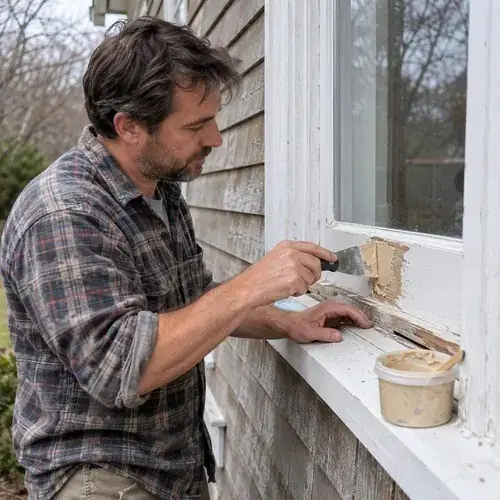
For localized rot, we remove the decayed fibres, let the area dry and saturate the remaining wood with a low-viscosity epoxy consolidant. The void is then filled with an epoxy paste filler that is shaped and sanded to the original profile.

Two-part systems such as Abatron's LiquidWood and WoodEpox are widely used for this, because they bond deep into the wood, stay slightly flexible and take paint well.

Dutchman Repairs and Partial Sill Replacement

When rot runs deeper than a patch can handle, we cut out the damaged section and splice in new wood, a technique carpenters call a dutchman. The new piece is matched in species and grain direction where possible, glued with exterior-grade adhesive and shaped to the existing profile.

This keeps most of the original sill while removing its weakest part, which matters on heritage windows.

Full Sill Replacement

If a sill is soft along most of its length or split through, it is replaced. We mill a new sill to the original slope and profile from a rot-resistant species, prime every face including the end grain, and cut in the drip groove the original had.

It is more work, but the frame and sashes stay in place and the interior finishes are barely disturbed.

Restoring Windows in Heritage Homes

Heritage planners generally favour repairing original windows over replacing them. In Kitchener, individually designated properties and properties in the four heritage conservation districts, Victoria Park, Civic Centre, St. Mary's and Upper Doon, need a heritage permit for alterations such as window replacement, while routine maintenance is treated differently.

Like-for-like repair, such as rebuilding a sill in the same shape and material, usually falls on the maintenance side, but the municipality makes the final call. Confirm with heritage planning staff before work starts, and see our permits and heritage guide for how the process works in Kitchener and nearby municipalities.

On heritage jobs we keep original glass where it survives, match muntin and moulding profiles, and use materials that can be repaired again in future. Cracked or missing panes in old sashes can be reset in glazing putty through our single pane glass replacement service.

Man applies wood filler with a putty knife to a damaged white window frame

Sealing and Repainting After Repair

A repair only lasts as long as the finish protecting it. Bare wood and epoxy are primed promptly with a quality exterior primer, paying extra attention to end grain, then finished with two coats of exterior acrylic paint.

  • Prime every cut: end grain soaks up water fastest and must be sealed first
  • Keep the slope: sills are shaped so water runs off toward the outside, never back toward the house
  • Caulk the right joints: seal where trim meets siding or masonry, but leave drainage paths open
  • Lap paint onto the glass slightly: a thin line of paint onto the pane seals the putty joint
  • Inspect every year or two: touch up cracked paint before water finds the wood
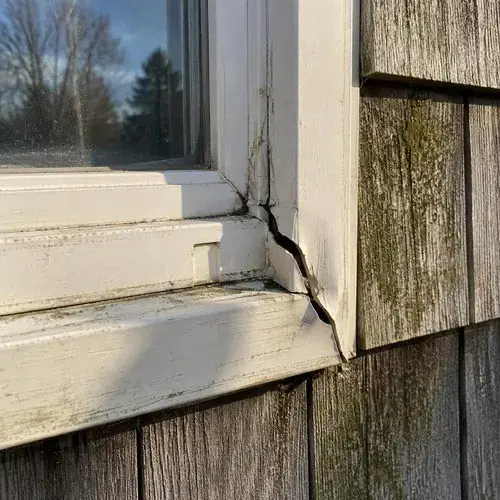
Close view of a white painted window frame and sill with a cracked

Sealing the Frame to the Wall

The joint between the window frame and the siding or brick is often where water first reached the wood. Where that perimeter joint needs a full reseal, our window caulking and sealing crew handles it with the correct sealant and backer rod.

Older paint may contain lead, particularly on homes built before 1990. We contain dust and follow lead-safe practices when stripping or sanding old finishes.

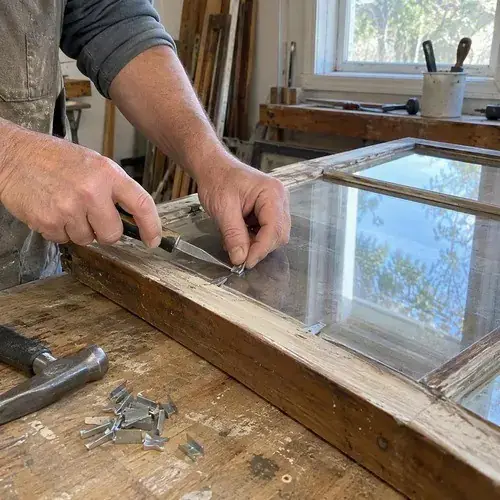
Hands remove glazing points from an old wooden window sash on a workbench with

When Replacement Is the Better Option

Repair is not always the right call, and we will tell you when it is not. Replacement usually makes more sense when:

  • Rot has spread through the jambs and into the wall framing, not just the sill
  • More than one sash rail is decayed along with the sill
  • The window is a lower-grade wood unit made from fast-grown wood that keeps rotting back
  • You need a large efficiency gain that storm windows or new seals cannot deliver
  • The total for repairing several windows approaches the cost of new ones
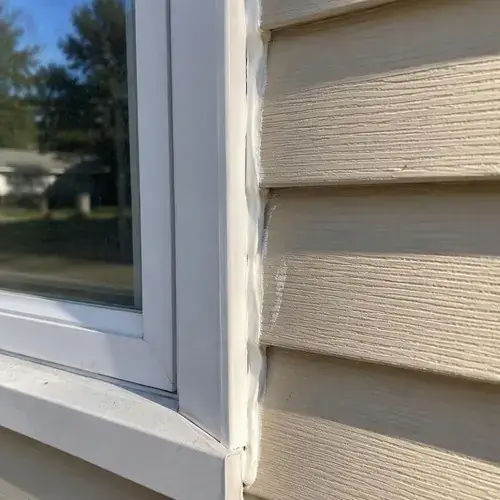
Close-up of white window frame corner with fresh caulk bead sealing the joint against

New Wood Windows That Keep the Look

When replacement is the answer, it does not have to mean giving up the character of the house. Solid wood and aluminum-clad wood units are available in profiles and divided-lite patterns that suit older homes.

Our wood windows page covers species, cladding and finish options in detail. On heritage properties, check the permit requirements before ordering, since replacement is where approval usually applies.

What Wood Window Repair Costs

These are typical 2026 ranges for Waterloo Region, including materials. Price moves with how far the rot has spread, ladder or scaffold access, lead-safe paint removal on older homes, and whether custom milling is needed to match a heritage profile.

Our installations carry a 20-year parts and labour warranty, and your written repair quote states the coverage that applies to the repair itself.

RepairTypical price (2026)What moves the price
Epoxy consolidation and fill$250 to $600 per windowSize and number of rot pockets, profile shaping
Dutchman or partial sill replacement$400 to $900 per windowLength of splice, species, profile matching
Full sill replacement$700 to $1,500 per windowSill length, custom milling, interior trim
Sash repair and reglazing$500 to $1,200 per sashJoint repairs, glass, putty and paint
Prime and paint after repair$100 to $250 per windowPaint removal, number of coats

Wood Frame Repair FAQs

Can a rotted window sill be repaired?

Usually, yes. Localized rot is repaired with epoxy consolidant and filler, deeper damage with a spliced-in section of new wood, and a sill that is soft end to end can be replaced without removing the whole window. We probe the wood to confirm which approach fits before quoting.

Is it cheaper to repair or replace wood windows?

For one or two windows with rot confined to the sill, repair almost always costs less. Once several windows need sills, sash work and new glass, the total can approach the price of replacement, and new units bring better energy performance. When the answer is close, we price both options side by side.

Do I need a heritage permit to repair wood windows?

Usually not for like-for-like repair, but it depends on the municipality and on how the property is designated. In Kitchener, replacing windows on a designated property or in a heritage conservation district generally requires a heritage permit, while routine maintenance is treated differently. Confirm with your municipality's heritage planning staff before work starts.

How can I prevent window sill rot?

Keep the paint intact, especially on the top of the sill and the end grain, and touch it up as soon as it cracks. Make sure gutters are not overflowing onto the window, keep snow off the sills and keep indoor humidity in check so condensation does not pool on the interior sill. An inspection every couple of years catches soft spots while they are still small.

Book a Wood Window Repair

Send photos of the sill and frame from outside and inside, and let us know if the house is heritage designated. We will assess the rot on site and quote the repair in writing.

Call or text226-806-0597
Monday to Saturday: 7:00am to 9:00pm
Sunday: 9:00am to 5:00pm
47 Bridge Street East, Kitchener, ON N2K 1J7
Call 226-806-0597Quote