Three Lites of Glass
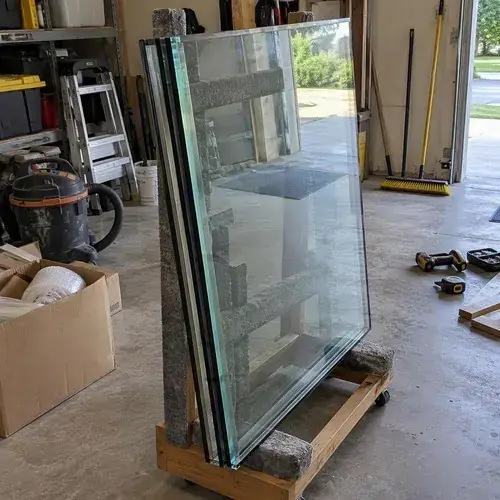
An outer, centre and inner lite are separated by two spacers and sealed at the edges. Some manufacturers use a thinner centre lite to save weight, since it carries no wind or impact load.
Get your written quote
Honest advice on when three panes pay off
GTS Windows & Doors supplies and installs triple pane windows for houses, rental properties, additions and new builds across Kitchener, Waterloo, Cambridge, Guelph and the surrounding townships. We have fitted windows in Waterloo Region since 1986, and our licensed, WSIB-covered crews are set up to handle the heavier glass that triple glazing brings. Homeowners, property managers and builders all get the same advice, the same ENERGY STAR certified products and the same 20-year parts and labour warranty.
Triple pane is often sold as the automatic upgrade for Canadian winters. Our view is more balanced: a third pane clearly helps in cold north bedrooms and big picture windows, yet adds cost, weight and a little less daylight with limited return in sunny or sheltered rooms. On many quotes we recommend a mix, placing triple glazing where it pays back and a well-built double pane where it does not.
Below we explain how triple pane units are built, how they compare with double pane, the hardware they need, what they cost and how heavy units have to be installed so they keep working for decades. For help reading the U-factor and ER numbers on a label, see our guide to energy efficient windows, which covers ratings in detail. Where a room would be better served by acoustic or solar control glass than by a third pane, we will tell you that too.
A triple pane window comes in the same styles and frame materials as any other, from casements to picture windows. What changes is the sealed glass unit inside the sash, which is thicker, heavier and more complex than a double pane unit.
An outer, centre and inner lite are separated by two spacers and sealed at the edges. Some manufacturers use a thinner centre lite to save weight, since it carries no wind or impact load.
Each cavity is filled with argon or, in slimmer units, krypton. Two still layers of gas slow heat flow far more than one, which is where most of the gain over double pane comes from.
Most triple pane units carry two Low-E coatings, one facing into each cavity. Coating choice and position shift the balance between heat retention and solar gain, as our Low-E glass page explains.
A triple pane unit typically measures about 1-1/4 to 1-3/4 inches thick, compared with roughly 3/4 to 7/8 inch for common double pane units. That thickness needs a deeper sash and frame, which is why triple glazing is designed in from the start.
Both options can meet ENERGY STAR. The real question is how much further triple glazing goes, and whether that extra performance matters in a particular room of your house.
North-facing rooms get almost no winter sun, so cutting heat loss is the only thing that counts there. Large picture windows and walls of glass benefit too, because the glass is most of the wall.
Bedrooms and humid spaces, such as bathrooms or homes with lots of plants or an aquarium, gain from the warmer inner glass. Deep energy retrofits and homes aiming for net zero usually specify triple glazing throughout.
South-facing glass collects useful solar heat in winter, and a high-gain double pane unit can come close to triple pane on net energy over a heating season. Rooms shaded by porches or trees see less difference either way.
A fixed budget often goes further by upgrading every window to good double pane than by putting triple into a few. Very large operable sashes and older walls with shallow openings can also suit the lighter unit.
| Factor | Good double pane (Low-E, argon, warm edge) | Triple pane (two Low-E, argon or krypton) |
|---|---|---|
| Typical whole-window U-factor | About 1.2 to 1.6 W/m²·K | About 0.8 to 1.1 W/m²·K |
| Inner glass on a very cold night | Cool to the touch | Noticeably warmer |
| Free solar heat in winter | Higher | Lower |
| Visible light | Higher | Slightly lower |
| Glass weight | Baseline | About 50 percent more |
| Typical price | Baseline | About 10 to 25 percent more per window |
Glass weighs about 2.5 kg per square metre for every millimetre of thickness. A third 4 mm lite therefore adds roughly 10 kg per square metre of glass, a load the hinges, operators and frame carry every time the sash moves.
Casement and awning sashes need hinges rated for that weight, heavier-duty operators and multi-point locks that pull the sash evenly onto its weatherstrip. Undersized hardware leads to sagging sashes, stiff cranking and air leaks within a few years.
Sliders and hung windows need stronger balances or rollers, and every frame needs a glazing pocket deep enough for the thicker unit. Before we quote, we check:
The inner pane of a triple pane window stays several degrees warmer than a double pane on a cold night. That difference shows up in January, when Waterloo Region temperatures can drop below minus 20 °C during a cold snap.
Warmer glass means less condensation and frost at normal indoor humidity, and less of the radiant chill you feel sitting next to a window. Paired with a warm-edge spacer, the bottom edge of the glass, where frost usually starts, stays warmer too.
Triple glazing does not remove the need to manage humidity. If indoor humidity runs high during a deep freeze, even triple pane glass will fog along its lower edge.
Triple glazing typically adds about $100 to $350 per standard window over the same model in double pane, depending on size, coatings and gas fill. Large fixed units carry bigger dollar premiums because the extra glass area is larger.
The table below shows typical 2026 installed ranges in Waterloo Region. Your quote depends on the factors listed underneath, and our window and door cost guide breaks prices down further by style and material.
| Window (installed, typical 2026) | Double pane | Triple pane |
|---|---|---|
| Standard vinyl casement or slider, about 30 x 48 in | $800 to $1,300 | $950 to $1,600 |
| Large vinyl picture window | $1,300 to $2,400 | $1,500 to $2,800 |
| Fibreglass casement, similar size | $1,300 to $2,200 | $1,500 to $2,600 |
A heavy unit that is poorly supported will sag, bind and leak air long before its glass wears out. These are the steps our crews follow on every triple pane opening.
We measure the rough opening, confirm it is square and level, and make sure the sill framing can carry the load without deflecting.
The frame sits on rigid setting blocks and shims under the jambs and any mullions, where the weight transfers down. We never let the sill span unsupported under a heavy unit.
Casement frames get solid shims behind each hinge and lock point. That stops the frame bowing when a heavy sash swings open.
Triple pane units are carried and set by two installers, with lifting aids on the largest pieces. Dropping or twisting a sealed unit can stress its edge seal long before any fog appears.
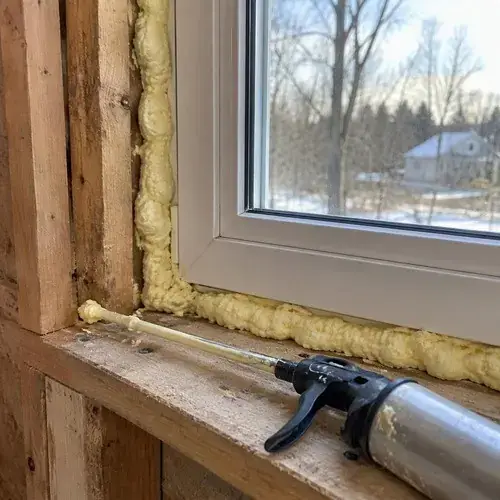
We insulate with low-expansion foam, seal to the air barrier and flash the sill. Finally we adjust the hardware so the sash closes evenly on its weatherstrip.
It is worth it for north-facing rooms, large glass areas and humid spaces, and for owners planning to stay in the home for many years. On sunny south walls or tight budgets, a well-built double pane often delivers most of the benefit for less. Many homeowners choose a mix of both.
Somewhat, but less than most people expect, because the third pane is usually the same thickness as the other two. Real noise reduction comes from laminated glass and mixed glass thicknesses. Our noise-reduction windows page explains how those work.
Usually not. Most existing sashes were built for a thinner double pane unit and cannot hold the thicker, heavier triple pane glass. If your windows already have triple glazing and one unit has fogged, we handle triple pane glass replacement on its own.
Slightly. Each extra lite and Low-E coating trims visible transmittance, so triple pane glass typically passes around 5 to 10 percentage points less light than comparable double pane. Most people do not notice indoors, although the glass can look a touch greyer side by side.
We will measure every opening and tell you honestly which rooms benefit from triple glazing and which do not. Your quote shows both options side by side where it matters.
Call or text226-806-0597