Expansion Close to Glass
Pultruded fibreglass expands and contracts at close to the same rate as the glass it holds. Because frame and glass move together, the seals between them are under less stress through each freeze-thaw cycle.
Get your written quote
Slim, strong frames for demanding openings
GTS Windows & Doors installs fibreglass windows for homeowners, custom home builders and property managers throughout Kitchener-Waterloo, Cambridge, Guelph and the surrounding townships, from single replacement openings to complete new builds. We have fitted windows and doors in Waterloo Region since 1986, and we are licensed, insured, WSIB covered and a member of SAWDAC.
Fibreglass sits between vinyl and wood in the market: it costs more than vinyl, needs far less upkeep than wood and is stronger than both. The frames are made by pultrusion, which pulls continuous glass fibres through resin and a heated die to form a hard, rigid profile that will not rot, rust or dent. The result barely changes size with temperature, which is the property that almost every other benefit on this page comes back to.
That stability is why fiberglass windows make sense for black exteriors, oversized openings and heavy triple pane glass, and why they suit owners planning to stay put for decades in a newer Waterloo subdivision or a renovated older home. Below we explain where the premium pays off, where a good vinyl window is the smarter buy, and what fibreglass typically costs installed in 2026. Every installation is backed by our 20-year parts and labour warranty.
Fibreglass is the premium synthetic option among the frame materials in our full range of windows. Four properties set it apart.
Look for a NAFS performance label (published in Canada as CSA A440) and an ENERGY STAR model listing on any fibreglass window you compare. The label shows tested air, water and wind resistance, which matters most on exposed second-storey walls and large fixed units.
Pultruded fibreglass expands and contracts at close to the same rate as the glass it holds. Because frame and glass move together, the seals between them are under less stress through each freeze-thaw cycle.
Fibreglass is several times stiffer than vinyl, so large sashes stay square and latch evenly without steel inserts. It also resists denting and does not turn brittle in deep cold.
Because the profile is strong, frames and sashes can be narrower than an equivalent vinyl unit. You see more glass, get more daylight and gain a cleaner, modern look on casement and picture combinations.
Fibreglass conducts little heat, and many hollow profiles are foam-filled at the factory. Frame performance is comparable to good vinyl, so the glass package still decides most of the window's U-factor.
If you are replacing standard-size white windows in a home you may sell within ten years, well-built vinyl windows usually give better value. We will tell you plainly when fibreglass is not worth the extra money.
Each frame material wins somewhere. This comparison uses typical 2026 installed prices for a medium casement in Waterloo Region.
| Factor | Fibreglass | Vinyl | Wood |
|---|---|---|---|
| Typical installed price, medium casement | $1,300 to $2,300 | $900 to $1,400 | $1,300 to $3,000 (solid or clad) |
| Movement with temperature | Low, close to glass | High | Low, but reacts to moisture |
| Strength for large units | Excellent | Needs reinforcement | Good |
| Dark exterior colours | Excellent | Limited by size and finish | Good with cladding or paint |
| Exterior upkeep | Wash yearly, repaint after many years if desired | Wash only | Paint or stain every 5 to 8 years unless clad |
| Typical lifespan | 30 to 40+ years | 20 to 30+ years | 30+ years with maintenance |
Most fibreglass windows arrive with a factory-baked exterior finish in a broad palette, from classic white and sandstone to black, bronze and deep greens. Interior faces are usually white, a matching colour or a wood veneer, depending on the product line.
Unlike vinyl, fibreglass can be repainted later if you change your siding or trim colour. The frame is cleaned, lightly scuffed and coated with a quality 100 percent acrylic exterior paint, following the manufacturer's guidance so the finish warranty stays intact.
Because the material does not soften in heat, dark colours are fine on any elevation and in any size the manufacturer builds. That is a common reason homeowners choose fibreglass over vinyl when they want black window frames.
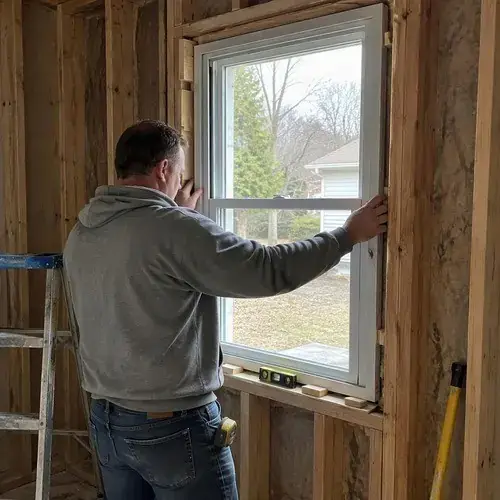
A rigid frame is less forgiving than vinyl when an opening is out of square, because it will not flex to hide the problem. We check the rough opening for level, plumb and twist before the window arrives, and correct the framing rather than forcing the unit to fit.
Each opening is measured on site and checked diagonally. A sloped sill pan or self-adhered membrane goes in first so any water that gets behind the frame drains outward.
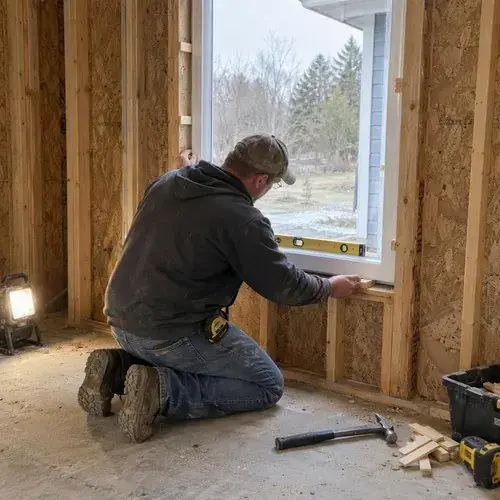
The frame is shimmed at the corners, mullions and every fastener point, then secured with screws or installation clips as the manufacturer specifies. Hardware is adjusted until each sash closes with even pressure all round.
Low-expansion foam fills the gap between frame and wall, and it is sealed to the home's air barrier on the room side. That keeps warm, humid indoor air away from the cold edge of the wall.
Head flashing, backer rod and a durable exterior sealant close the outside, with the sill drainage left open. Inside, we fit new casing and extension jambs to suit your trim.
Fibreglass windows come from a smaller group of manufacturers than vinyl, and several are Canadian. Examples available to Ontario homeowners include Inline Fiberglass and Fibertec in Ontario, Cascadia Windows in British Columbia, and US makers such as Marvin and Pella.
Your quote will name the exact manufacturer, product line, glass package and ENERGY STAR model for each opening. That makes it simple to compare our price with another installer's on the same product.
Expect fibreglass to run roughly 30 to 60 percent more than a comparable vinyl window. Dark exterior colours usually carry a smaller upcharge on fibreglass than on vinyl, which narrows the gap if you want black frames.
Fibreglass is usually built to order, so lead times tend to run longer than for common vinyl sizes. For whole-house budgets and how fibreglass compares with every other material, see our Kitchener window and door cost guide.
| Fibreglass window | Typical installed price (2026) |
|---|---|
| Casement or awning, medium | $1,300 to $2,300 |
| Slider or hung window, medium | $1,200 to $2,100 |
| Picture window, large | $1,600 to $3,200 |
| Casement and picture combination | $3,000 to $6,000 |
| Triple pane upgrade | Add $150 to $350 per window |
For large openings, dark exterior colours and heavy triple pane glass, fibreglass performs better and lasts longer. For standard-size white windows, a quality vinyl window performs very similarly for less money. The right choice depends on your openings, colour and how long you plan to stay.
Fibreglass frames commonly last 30 to 40 years or more, because the material does not rot, rust or soften with heat. As with any window, sealed glass units, weatherstripping and hardware may need service before the frame does.
Yes. The surface is cleaned, lightly sanded and painted with a quality 100 percent acrylic exterior paint, and dark colours are not a problem. Check the manufacturer's refinishing guidance first so you do not affect the finish warranty.
Very little. Once a year, wash the frames, clear the sill drainage, check the exterior sealant joints and lubricate operators and locks. Replace worn weatherstripping when you notice drafts.
Book an on-site measure and we will price fibreglass alongside vinyl for the same openings, so you can see exactly what the upgrade costs. Every quote is itemized by window.
Call or text226-806-0597