Smooth Fibreglass
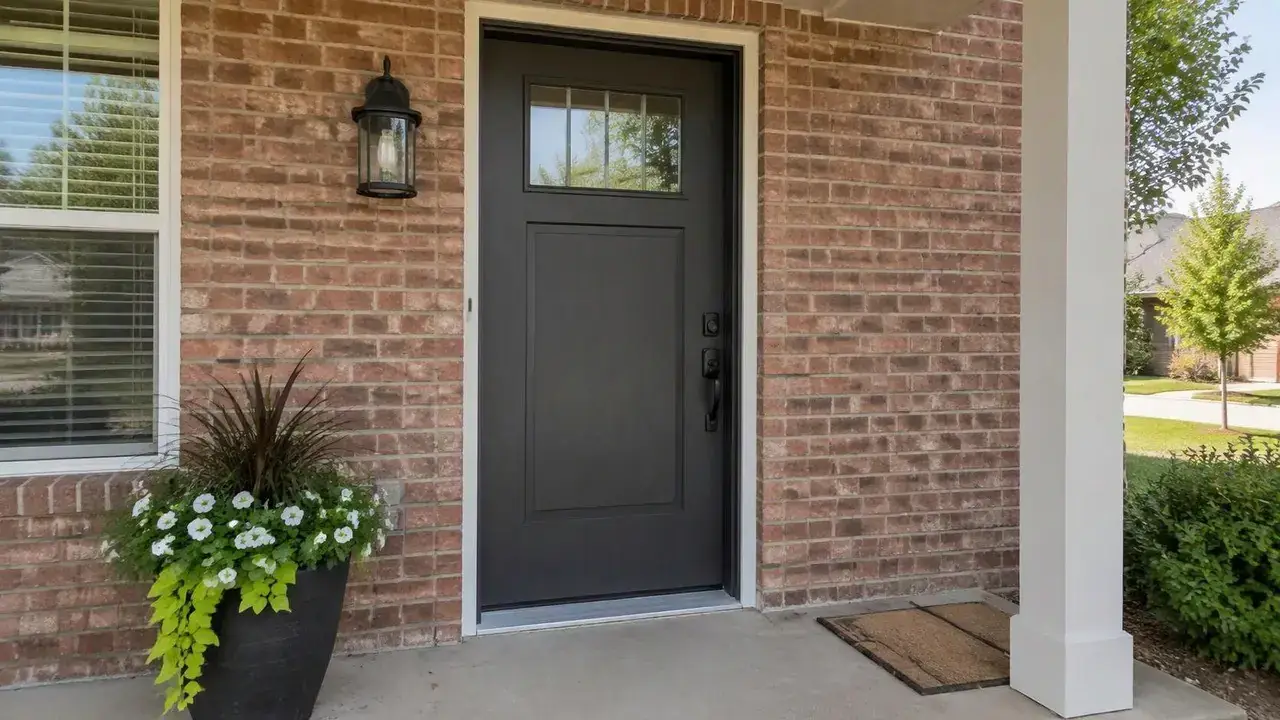
Smooth skins are made to be painted and suit modern, farmhouse and transitional homes. They are usually the lower-priced fibreglass option, and they hold bold, saturated colours well.
Get your written quote
Woodgrain looks without the upkeep of wood
Fibreglass entry doors ride out Ontario's swing from humid summers to bitter winter nights with very little movement, and GTS Windows & Doors has fitted them across Kitchener-Waterloo since 1986. We install smooth and woodgrain fibreglass doors, factory finished or stained, with matching sidelights, transoms and multi-point hardware. Our customers include homeowners, custom builders, renovators and property managers from Waterloo and Cambridge to Guelph and the surrounding townships.
Fibreglass costs more than steel, so it is worth knowing when it earns that premium. It suits entries that take full afternoon sun or driving rain, owners who want a stained wood look without refinishing every year or two, and anyone tired of dents and rust at the bottom of a steel door. It is also a sensible long-term choice for a home you plan to stay in for decades.
Here we cover how fibreglass behaves in local weather, smooth versus woodgrain skins, finishing, glass and cost. For the bigger picture on choosing and replacing a front door, visit our entry door replacement page. Every install is backed by our 20-year parts and labour warranty, and we are licensed, insured, WSIB covered and a SAWDAC member with a 4.5-star rating from 31 Google reviews.
Waterloo Region winters bring repeated freeze-thaw cycles, with snow melting on a sunny step in the afternoon and refreezing overnight. Wood absorbs that moisture and swells, while steel conducts cold straight through its edges and stresses its paint with every temperature swing.
Fibreglass skins are compression moulded from glass-reinforced composite, which barely reacts to moisture and does not conduct cold the way metal does. The inside face stays close to room temperature, so you do not get frost along the lock edge on the coldest mornings.
The skins will not rust or rot, and they resist dents from everyday knocks. Inside, composite stiles and rails and a polyurethane foam core keep the door flat and well insulated, so the weatherstrip contact stays even from January to July.
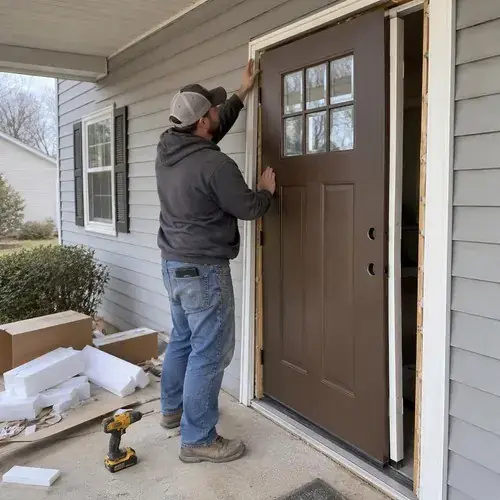
That stability only pays off if the frame around it is right. We set fibreglass doors on a sloped sill pan, shim the frame dead plumb so the multi-point lock engages smoothly, and fill the gap to the wall with low-expansion foam that will not bow the jambs.
Brands you will commonly see in this category include Therma-Tru, Masonite and Plastpro. We quote the product that suits your entry and budget rather than pushing one line.
Smooth skins are made to be painted and suit modern, farmhouse and transitional homes. They are usually the lower-priced fibreglass option, and they hold bold, saturated colours well.
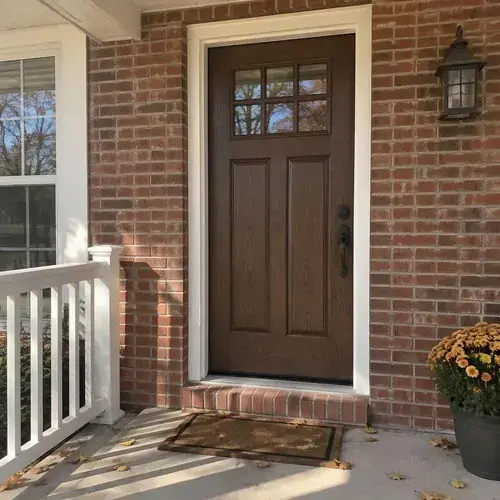
Woodgrain skins are moulded from real wood patterns, commonly oak, mahogany, cherry or fir. Once stained, a good woodgrain door is hard to tell from wood at a few steps away. Premium lines add deep panel profiles and crisp sticking that mimic true stile-and-rail construction.
Factory finishing gives the most even result and usually the strongest finish warranty. Many lines can be ordered pre-stained or painted in a wide range of colours.
Site finishing lets you match an exact stain or colour to your trim, floors or shutters. Fibreglass takes gel stain and exterior acrylic paint, and a stained door needs a clear, UV-resistant topcoat to stay rich.
Upkeep is light: wash the door twice a year and renew the clear topcoat when it starts to look dull, typically every 2 to 4 years on a sunny exposure. Painted fibreglass needs even less attention.
One caution for dark finishes: a clear glass storm door over a sun-facing fibreglass door can trap enough heat to damage the finish and weatherstrip. Our screen and storm doors page explains vented and screen-only options that avoid the problem.
Both are insulated, secure and low maintenance compared with wood. The differences show up in weather exposure, appearance and price.
| Factor | Fibreglass | Steel |
|---|---|---|
| Dents | Resists dents; a hard, sharp impact can crack the skin | Dents, and creases cannot be removed |
| Rust and rot | Neither | Rusts where the coating is damaged |
| Frost on the inside edge | Rare, because the skin does not conduct cold | Possible on doors without a good thermal break |
| Wood look | Convincing woodgrain that can be stained | Mostly painted; embossed grain looks flatter |
| Security | Equal with the same frame and lock | Equal with the same frame and lock |
| Typical installed price, single door | $2,800 to $5,000 | $2,000 to $3,800 |
Glass is the least insulated part of any door, so fibreglass doors with lites use sealed insulating glass, often triple glazed with a low-E coating. Decorative glass is usually sealed between two clear panes, which protects the pattern and makes it easy to clean.
Many makers grade their decorative glass on a privacy scale, from clear through rain, reeded and frosted textures up to heavily obscured or leaded designs. We bring samples so you can judge them in your own entry light, not a showroom.
Matching sidelights and transoms use the same glass and grille pattern as the door. Blinds between the glass give adjustable privacy with no cords and nothing to dust.
These are typical 2026 installed prices in Waterloo Region, including removal, insulation, interior casing and disposal. Skin style, stain or paint, glass, sidelights and hardware move the price, and so does any rot repair found when the old door comes out.
Our Kitchener window and door cost guide explains how to compare quotes line by line. Planning more than one door? Our exterior doors overview covers patio, French and screen doors too.
| Fibreglass door package | Typical installed price |
|---|---|
| Fibreglass slab only, fitted and finished | $1,200 to $2,200 |
| Smooth fibreglass pre-hung door, single, painted | $2,800 to $3,800 |
| Woodgrain fibreglass pre-hung door, single, stained | $3,500 to $5,000 |
| Fibreglass door with one sidelight | $4,500 to $6,500 |
| Fibreglass door with two sidelights or a transom | $5,500 to $9,000 |
Usually yes if the door faces south or west, has no porch roof, or you want a stained wood look without yearly upkeep. The extra $800 to $1,500 over a comparable steel door buys a door that will not dent, rust or frost on the inside edge. On a shaded, covered entry, a good steel door can be the better value.
Yes. Woodgrain skins are moulded from real oak, mahogany or fir patterns, and gel stain settles into the grain the way it would on wood. Premium doors add realistic panel profiles, so the door holds up to a close look.
Not from cold alone. Fibreglass stays stable at the temperatures we see in Waterloo Region and does not turn brittle the way some plastics can. A severe, sharp impact can crack a skin at any temperature, but that is uncommon and small damage can often be repaired.
Wash it with mild soap and water in spring and fall, and check the clear topcoat once a year. When the finish starts to look dull or chalky, lightly scuff it and apply the topcoat the manufacturer recommends, typically every 2 to 4 years in full sun and less often under a porch. Avoid abrasive cleaners and pressure washers.
Book an on-site measure and we will bring glass and finish samples, check your frame and sill, and send a written quote for smooth or woodgrain fibreglass.
Call or text226-806-0597