Appearance
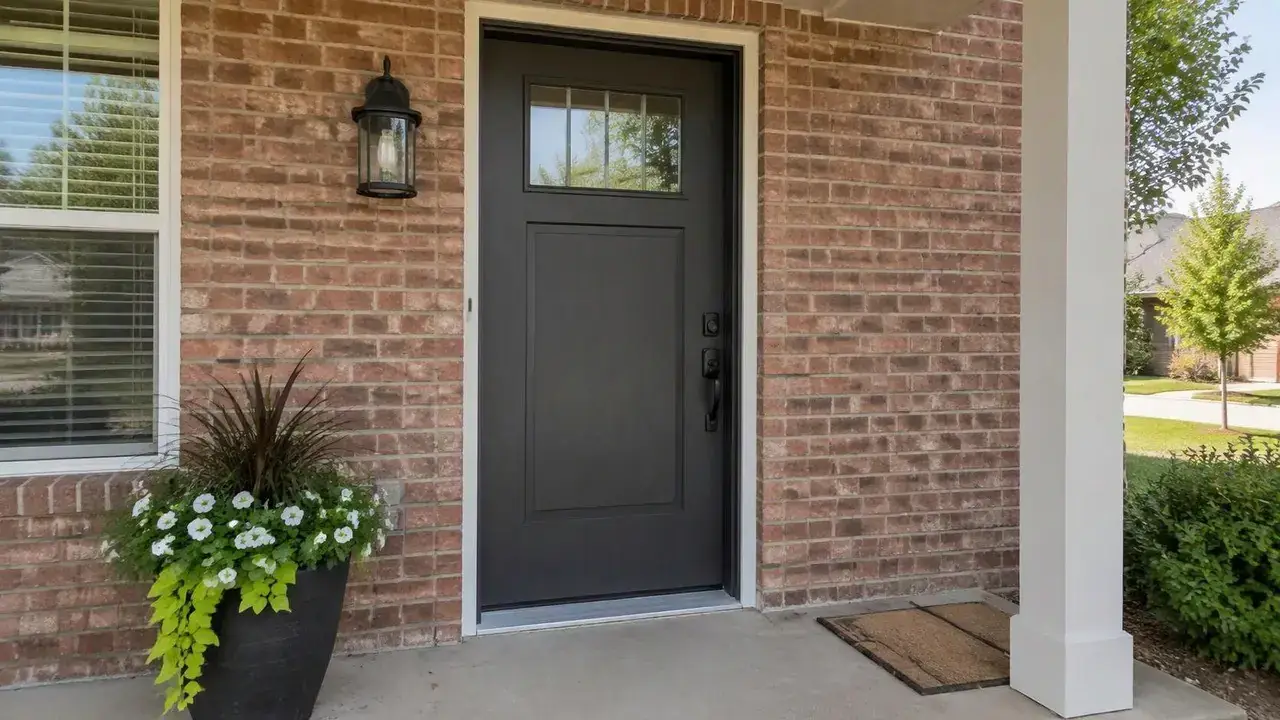
Real grain, crisp raised panels and true divided lites cannot be fully copied by a moulded skin. A wood door can be stained, painted or oiled, then sanded and refinished again decades later.
Get your written quote
Real wood doors for heritage and custom homes
Nothing matches the weight, sound and grain of a real wood front door, and GTS Windows & Doors has been hanging wood entry doors in Kitchener-Waterloo homes since 1986. We install solid and engineered wood doors, with matching sidelights and transoms, for century-home owners, custom builders, designers and homeowners who simply want the real thing. Our crews work across Waterloo Region, Guelph, Elora and the surrounding townships.
Wood asks more of its owner than steel or fibreglass. It moves with the seasons, it depends on a protective finish, and sun and rain will find any gap in that finish. Choosing the right construction and giving the door proper shelter matter more with wood than with any other material, and they are decisions best made before the door is ordered, not after it starts to check and peel.
Our job is to set a wood door up to last: choosing a stable construction, making sure all six sides are sealed, installing it under adequate cover, and giving you a realistic refinishing schedule. We are licensed, insured and WSIB covered, and every install carries our 20-year parts and labour warranty. If you are still comparing materials, start with our front door replacement page.
Real grain, crisp raised panels and true divided lites cannot be fully copied by a moulded skin. A wood door can be stained, painted or oiled, then sanded and refinished again decades later.
A wood door closes with a heavy, quiet sound that owners notice every day. That mass also helps soften street noise in homes close to the sidewalk.
In Victorian, Edwardian and Craftsman homes, a wood door is usually the most authentic choice. It can be built to match original panel layouts, mouldings and glass.
Species affects appearance, stability, weight and price. These are the woods most often used for exterior doors in our area.
Traditional doors are built from solid stiles and rails, the vertical and horizontal frame pieces, with panels floating between them. They look and feel authentic, but wide solid pieces can twist or bow as the seasons change.
Engineered doors bond thick veneers of the show wood over a laminated or finger-jointed core with the grain alternating, which resists warping far better. Some add an insulated core, so we recommend engineered construction for most exterior doors.
Solid construction still makes sense for a sheltered heritage entry where matching original joinery matters most. We will tell you honestly which suits your opening and exposure.
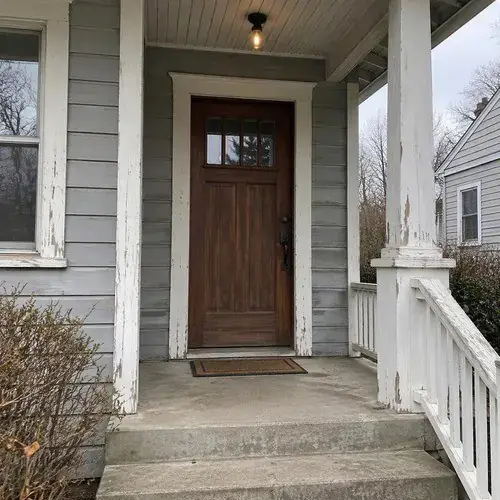
Kitchener has four heritage conservation districts: Victoria Park, Civic Centre Neighbourhood, St. Mary's and Upper Doon. Waterloo's MacGregor-Albert neighbourhood and Guelph's Brooklyn and College Hill area are also designated districts.
On designated properties, replacing a front door can require a heritage permit even when the opening stays the same. Kitchener's heritage guidance asks owners to consider repairing an original door before replacing it, and to use replacements compatible with the original.
Where replacement is approved, a wood door built to the original panel pattern, glass layout and proportions is usually the smoothest path. Our permits and heritage guide explains when approval is needed and how the process works.
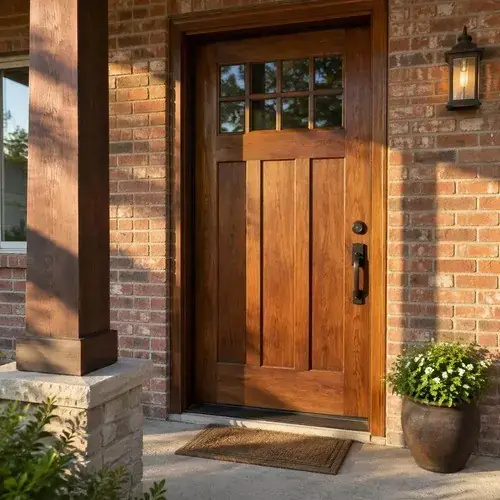
South and west-facing doors take the hardest beating from UV and wind-driven rain. Protection comes down to five things, and we plan for each one before the door is ordered.
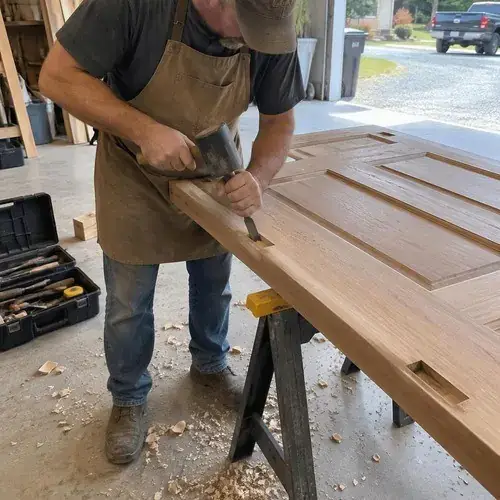
Most wood entry doors are made to order, so we measure the rough opening and confirm swing, hardware bore, glass and species before placing the order. Custom sizes, arched tops, speakeasy grilles, matching sidelights and transoms are all possible.
Lead times for made-to-order wood doors typically run 6 to 12 weeks, and longer for fully custom designs or special species. For a spring install, it pays to order in late winter.
Some wood doors arrive unfinished, and they must be fully finished before they face the weather. We schedule installation around that so the door is never left raw on your porch.
Matching patio or French doors can be planned at the same time for a consistent look; see our full range of exterior door installation services.
These are typical 2026 installed prices in Waterloo Region, including removal, insulation, interior casing and disposal. Species, construction, glass, hardware, finishing and any frame repairs move the price.
Wood is also heavy, so we hang these doors on ball-bearing hinges with long screws into the framing. A heavy door that is not fully supported will sag, so an even gap around the slab is the first thing to watch in the years after install.
Plan on renewing the clear coat every 1 to 2 years on a door in full sun and every 3 to 5 years under a deep porch. Catching dull spots early keeps the job to a light sanding and recoat instead of a full strip.
| Wood door package | Typical installed price |
|---|---|
| Engineered wood door, single, standard design | $4,500 to $6,500 |
| Engineered or solid wood, single, premium species | $6,000 to $9,500 |
| Wood door with sidelights | $8,000 to $14,000 |
| Fully custom wood door with sidelights or transom | $12,000 and up |
Yes, with protection. A wood door under a porch roof or deep overhang, with its finish kept up, can last generations in Waterloo Region. On an exposed south or west wall with no cover, a woodgrain fibreglass entry door is usually the wiser choice.
It depends on exposure. A door in full sun may need a fresh clear coat every year or two, while one under a deep porch can go 3 to 5 years. Renew the finish when it starts to dull or chalk, before water reaches bare wood.
More than older wood doors, yes. Engineered doors with insulated cores, insulated glass, compression weatherstrip and an adjustable sill perform reasonably well, and air sealing around the frame matters as much as the slab. A wood door will still insulate less than a foam-core steel entry door, so it is a choice made for character.
Not automatically. Each district plan sets its own guidelines, which generally favour repairing original doors and using replacements compatible in material, design and proportion. Heritage planning staff review applications case by case, so confirm with the city before ordering.
Book an on-site measure and we will assess your entry's exposure, talk through species and construction, and send a written quote with realistic lead times.
Call or text226-806-0597